


With the Bayeux Tapestry now in London, Normandy has lost, temporarily at least, one of its most famous works of art. But there are plenty more to celebrate in the region, whether you are on holiday by the sea, exploring the D-Day beaches or tasting the northern French delicacies, from camembert and neufchâtel to calvados and cider. The birthplace of Impressionism and a favourite destination for Modernists like Picasso, Braque and Duchamp, Normandy has a particularly rich 19th- and 20th-century cultural heritage and some truly excellent museums. Here is a taste of what the Tapestry has left behind.
1. Louis and Charles Rochet, Equestrian Statue of William the Conqueror (1851), Falaise
Statue of William the Conqueror on a horse, at Falaise, by Louis Rochet
© Marie-Anaïs Thierry
Local boy made good, William the Conqueror was born in Falaise in 1028. But while he was buried in Caen and celebrated in the Bayeux Tapestry during his lifetime, it took this modest town in Calvados until 1851 to erect a triumphant equestrian statue in his honour. Part funded by national subscription, it was sculpted by Louis Rochet and his brother Charles, who went on to make the statue of Charlemagne which is on the edge of the square in front of Notre Dame cathedral in Paris.
2. Shrine of Saint Taurin (13th-century), Église Saint-Taurin, Évreux
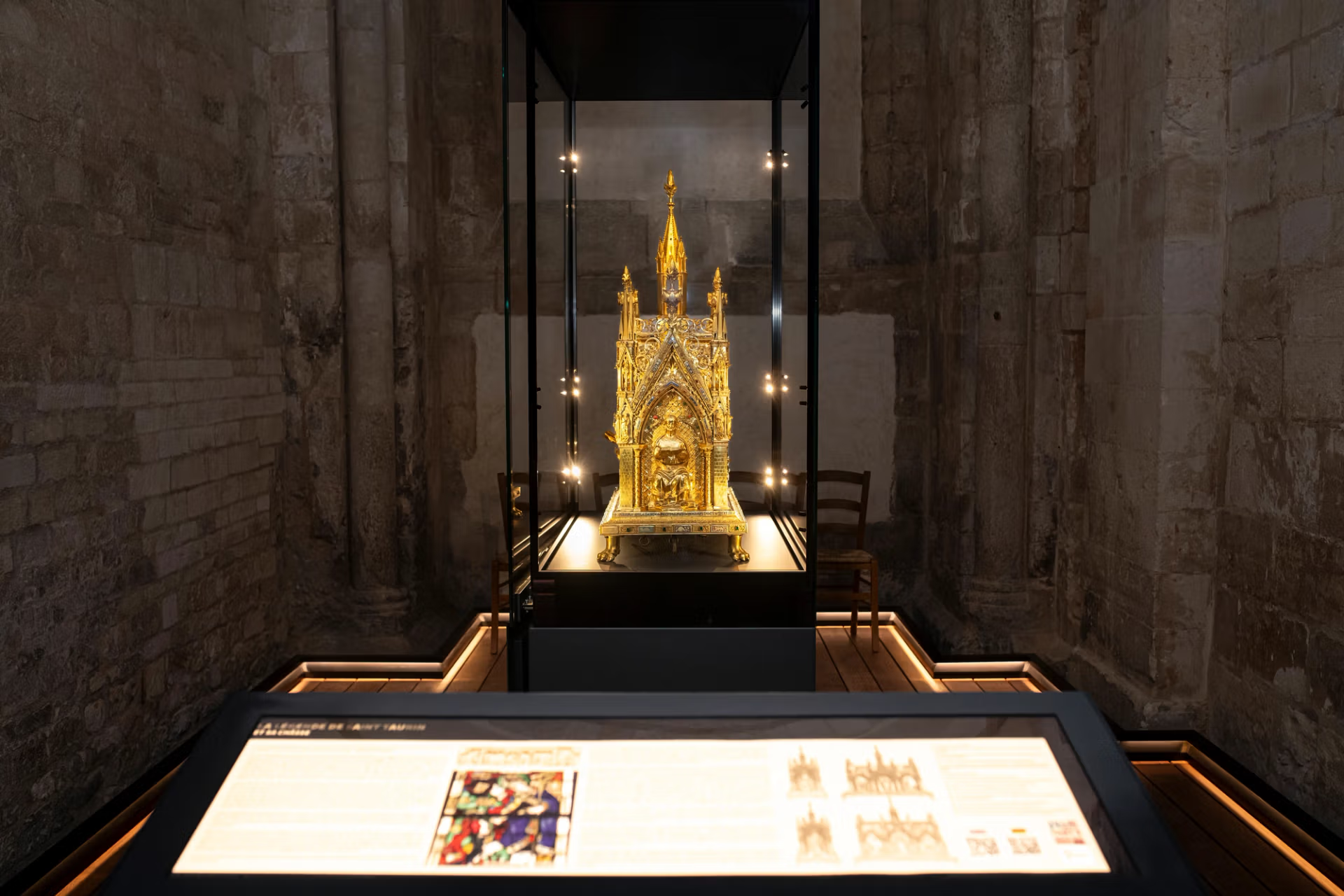
The shrine in its new display case in Église Saint-Taurin
© Stephane Vuillemin Ville d’Évreux
With the Bayeux Tapestry out of the country, this 13th century reliquary must be counted as Normandy’s greatest medieval treasure. It was made in Paris between 1240-1255 by an unknown goldsmith to hold the relics of Saint Taurinus who, in the fifth century, was the first Bishop of Évreux. He was canonised for his many miracles, which included facing down demons and raising a girl from the dead. The shrine is a sumptuous piece of bronze, silver and gold leaf over a wooden chest and embellished with figures and imagery from the saint’s life.
3. Caravaggio, Christ at the Column (around 1607), Musée des Beaux Arts, Rouen
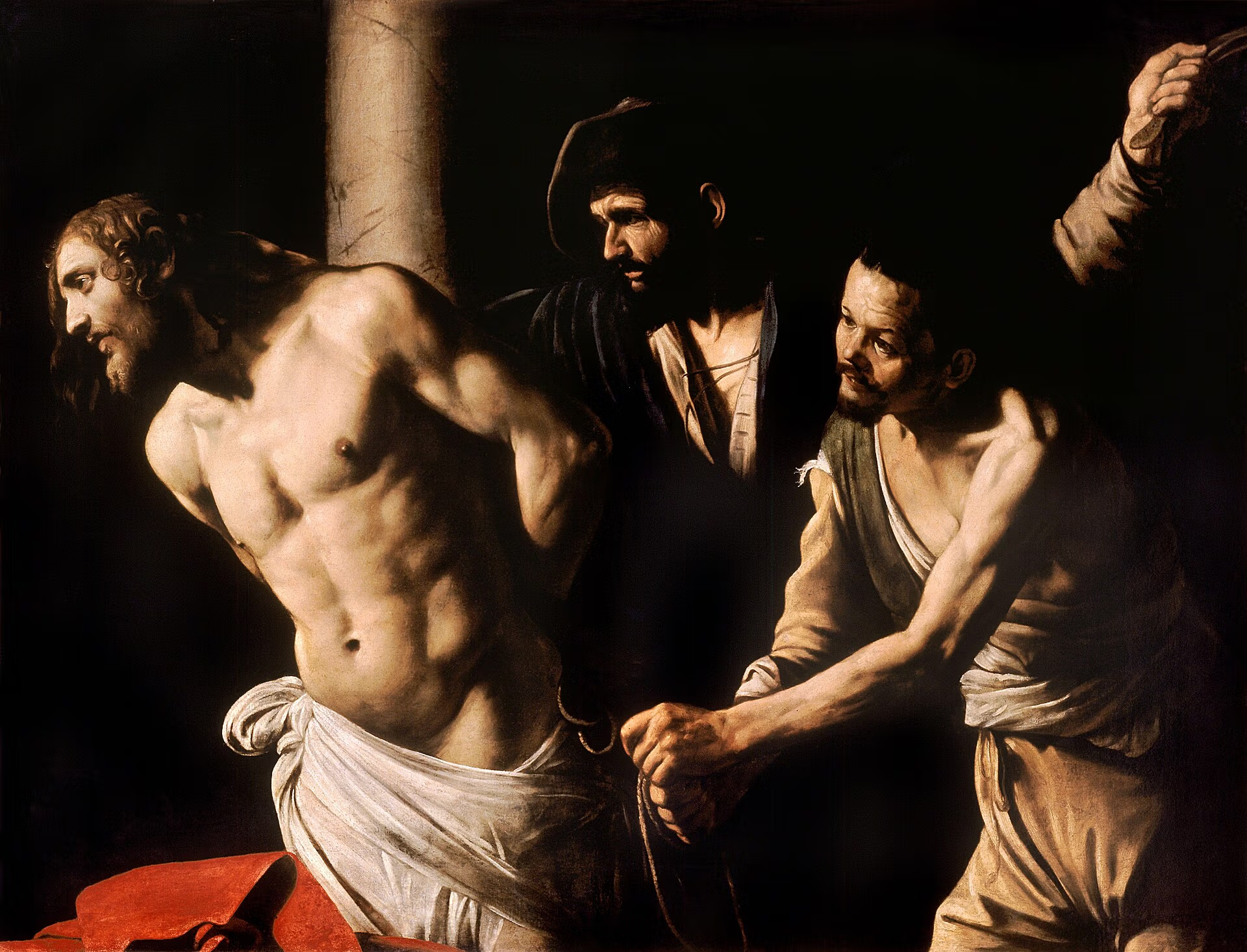
Christ at the Column (around 1607) by Caravaggio at the Musée des Beaux-Arts de Rouen
© GrandPalaisRmn / Gérard Blot; Courtesy Wikimedia Commons
The Musée des Beaux Arts in Rouen has one of the best collections of any French regional museum, and one of the highlights is this rare Caravaggio masterpiece. Bought as a Mattia Preti in 1955, it was later identified as one of the handful of paintings Caravaggio made in Naples in 1606 and 1607 after he had fled a murder charge in Rome. He had just completed the life-sized Flagellation of Christ which is still in Naples. In this smaller version, he changes the angle of view and compresses the action into a tighter space by reducing the figures to half length.
4. Eugène Boudin, Lady in White on the Beach at Trouville (1869), Musée d’art moderne André Malraux (MuMa), Le Havre
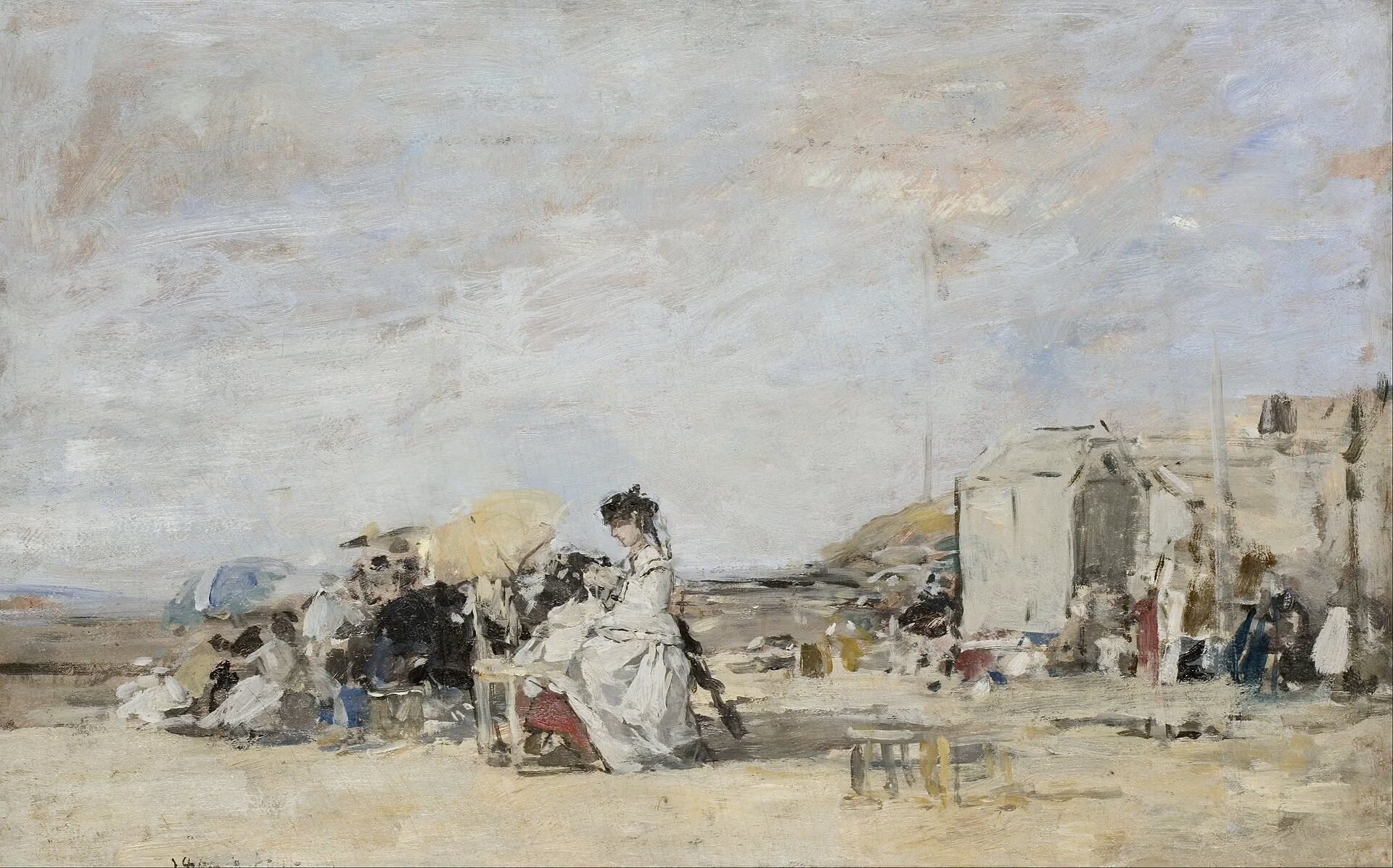
Eugène Boudin’s Lady in White on the Beach at Trouville (1869)
© MuMa Le Havre / Florian Kleinefenn; Courtesy Wikimedia Commons
Born in Honfleur, Boudin was one of the first painters in France to focus on painting outdoors. His experiments with light effects and cloud studies had a huge impact on Claude Monet. The two artists met when Monet was 17 and Boudin was 33. The older man is credited with persuading his new friend to take up landscape painting. There are extensive collections of his work both in MuMa and the Musée Eugène-Boudin in Honfleur. This view of the beach at Trouville is typical of the many paintings he made depicting fashionable French society at the seaside. Monet painted the same beach the following summer while on honeymoon with his wife, Camille.
5. Eva Gonzalès, Plage de Dieppe vue depuis la falaise Ouest (1871), Château-Musée, Dieppe
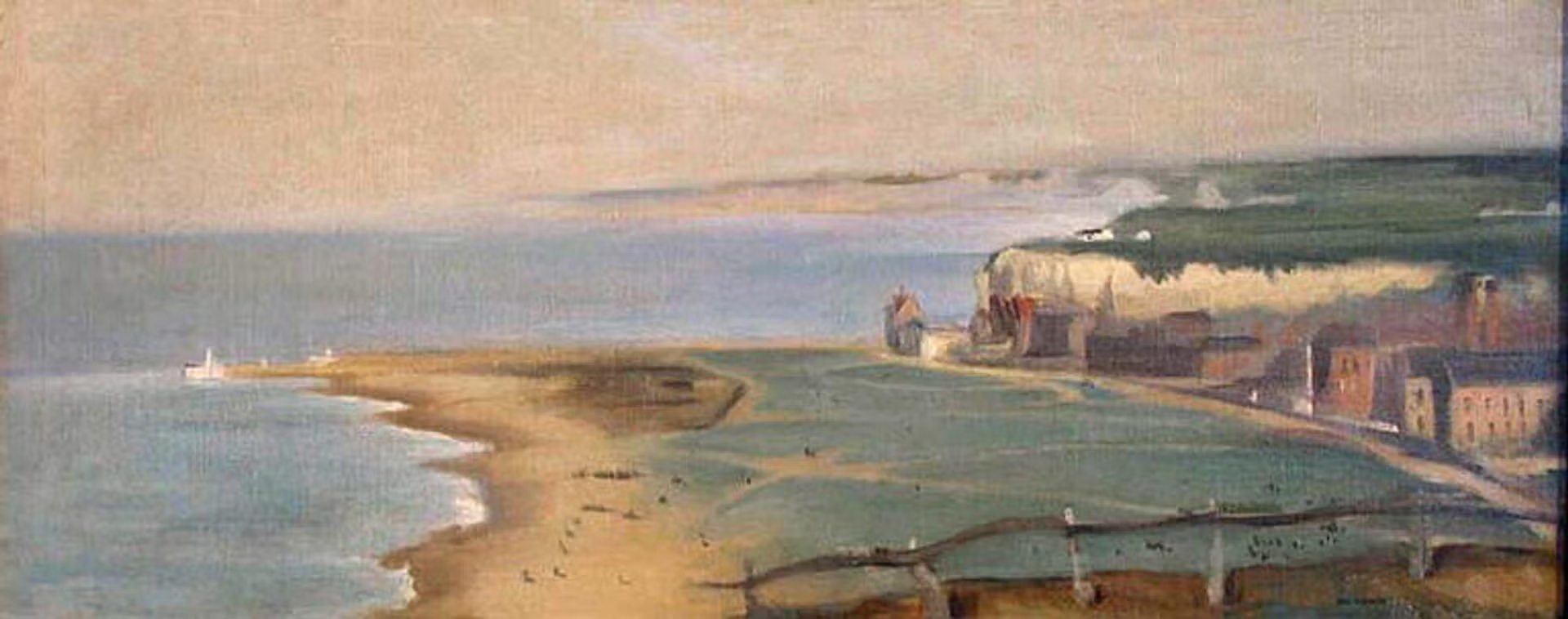
Eva Gonzalès’s Plage de Dieppe vue depuis la falaise Ouest (1871) at the Château-Musée, Dieppe
Photo: Rlbberlin; Courtesy Wikimedia Commons
This plein-air sketch, now in Dieppe’s Château-Musée, was made by the 24-year-old Eva Gonzalès during a stay in the town when her star was just beginning to rise. She had begun studying with Édouard Manet in 1869 and exhibited in the Paris Salon the following year. The sketch shows a panoramic view of the then-fashionable resort, with its beach backed by lawns laid out to a design commissioned by the future Empress Eugénie in 1852. The viewpoint of this light-infused study is from the west cliffs close to the château itself.
6. Claude Monet’s garden (from 1883), Giverny
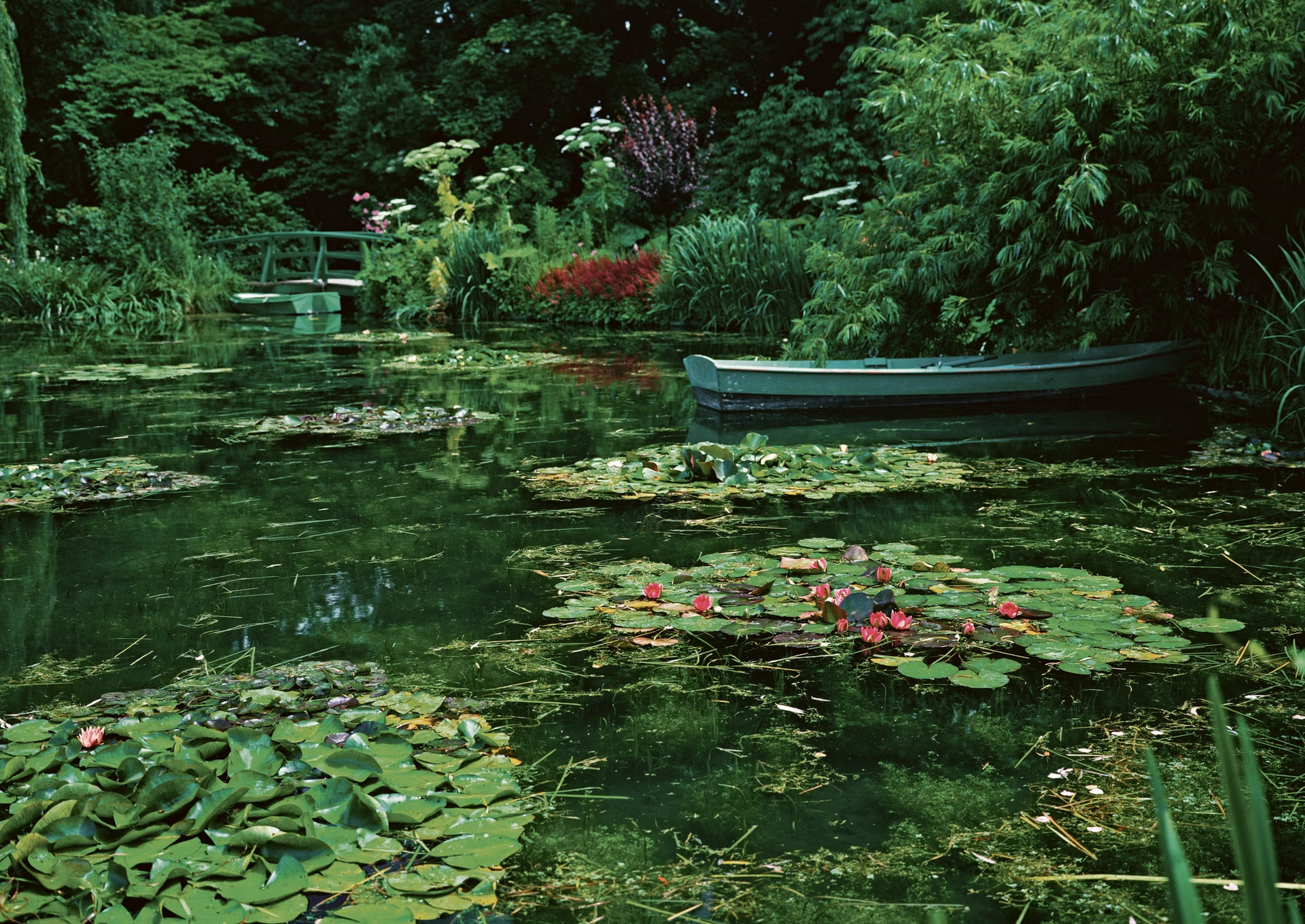
Water lilies at Giverny
Photo Garden Guru/Adobe Stock
Between 1883 and his death in 1926, Monet made the long and low, slate-roofed manor house on the edge of the village of Giverny his permanent home. His famous series of haystacks and poplars were painted nearby, as were some 250 pictures of the water gardens, which from about 1895 were virtually his only subject. But Monet’s first priority was not his painting; it was the gardens themselves, which he considered “my most beautiful masterpiece”. With the help of his assistants, he transformed the land in front of the house which ran down to the water meadows. Neglected after his death, they were restored in the 1970s based on family memories, photographs and the paintings themselves.
7. Claude Monet, Rouen Cathedral Façade and Tour d’Albane, grey weather (1894), Musée des Beaux Arts, Rouen
One the most powerful examples of Monet’s obsession with repeating renditions of the same subject are the 30 studies which he made of the west façade of Rouen cathedral between 1892 and 1895. The details of the carved stonework of the façade are extraordinarily beautiful, but Monet was more interested in the rawness of the weathered limestone itself. He depicted the cathedral backlit at dawn, luminous in the afternoon sun, or, as in this example, ghostly grey in the evening gloom. His viewpoint for the series was the changing room of a ladies’ clothes shop in the building opposite. Monet’s studio was, of course, suitably screened off.
8. Marcel Duchamp, Two Nudes (1910), Musée des Beaux Arts, Rouen
After Monet, Normandy also produced two of the most radical artists of the early 20th century—Marcel Duchamp and Georges Braque (below). Duchamp was born to a family of artists in Blainville, Normandy in 1887. He had early success at the 1908 Salon d’Automne and in the Salon des Indépendants the following year. Paintings like this one—the only Duchamp work in Normandy—did not find favour, however, especially with the influential poet and critic Guillaume Apollinaire, who referred to “Duchamp’s very ugly nudes”. This painting, on permanent loan from the Centre Pompidou, is one of several he made on the same subject in 1910.
9. Georges Braque, The Tree of Jesse (1961), stained-glass window at L’Église Saint-Valery, Varengeville-sur-Mer
Braque grew up in Le Havre where he trained as a painter and decorator. In 1930, after he found fame with Picasso in Paris, he returned to the Normandy coast and built a house on the cliffs at Varengeville-sur-Mer, which would become his regular retreat. In 1961, he completed this stained-glass window for the choir of the local church dating back to the 12th century. Braque relished working with the rich colours and the geometrical shapes created by the leading. Upon his death two years later, he was buried in the churchyard.
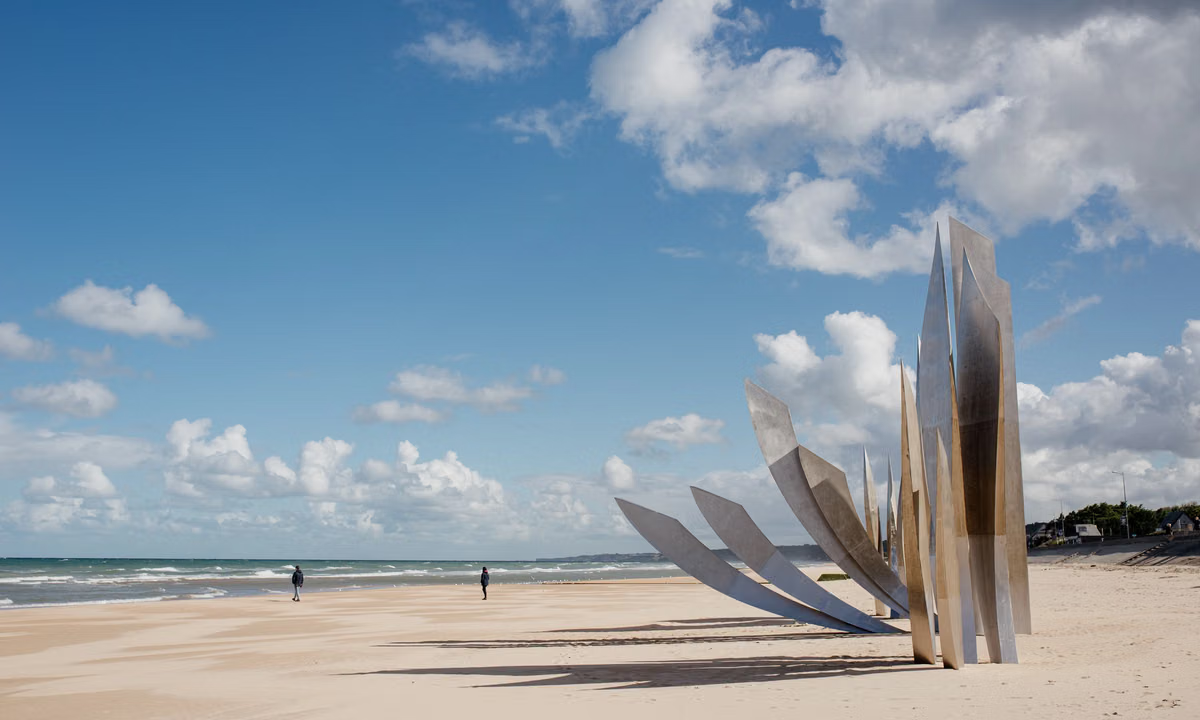
10. Anilore Banon, Les Braves (2004), Omaha Beach
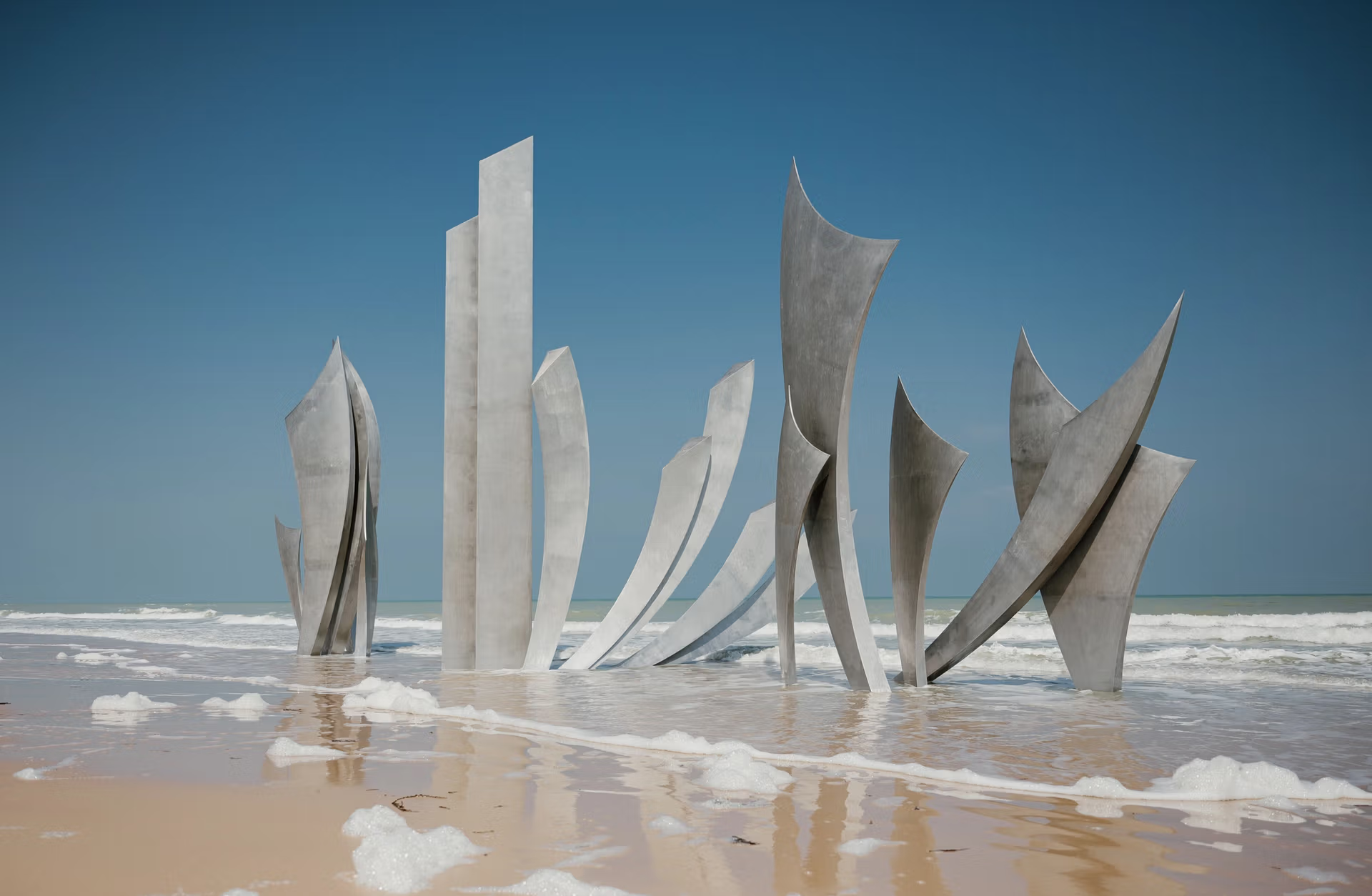
Anilore Banon’s monument Les Braves (2004) at Omaha Beach
© Marie-Anaïs Thierry
Moroccan-born Anilore Banon was commissioned to create a 60th anniversary tribute to the Normandy landings, and particularly the US soldiers from the 1st and 29th Divisions who stormed Omaha Beach on 6 June 1944. Her response was this stainless steel sculpture installed on the sands of Vierville-sur-Mer. According to Banon, the three clusters of curved blades represent the wings of hope and fraternity, and the rallying call “Rise, Freedom!”
• Nick Trend, France in the Footsteps of the Great Artists, Thames & Hudson, 352pp, £50 (hb), published 10 September
