


The Netherlands and Germany intend to return more than 2,000 cultural objects belonging to Ghana taken unlawfully during colonial conquests, the Ghanaian minister of foreign affairs Samuel Okudzeto Ablakwa has announced.
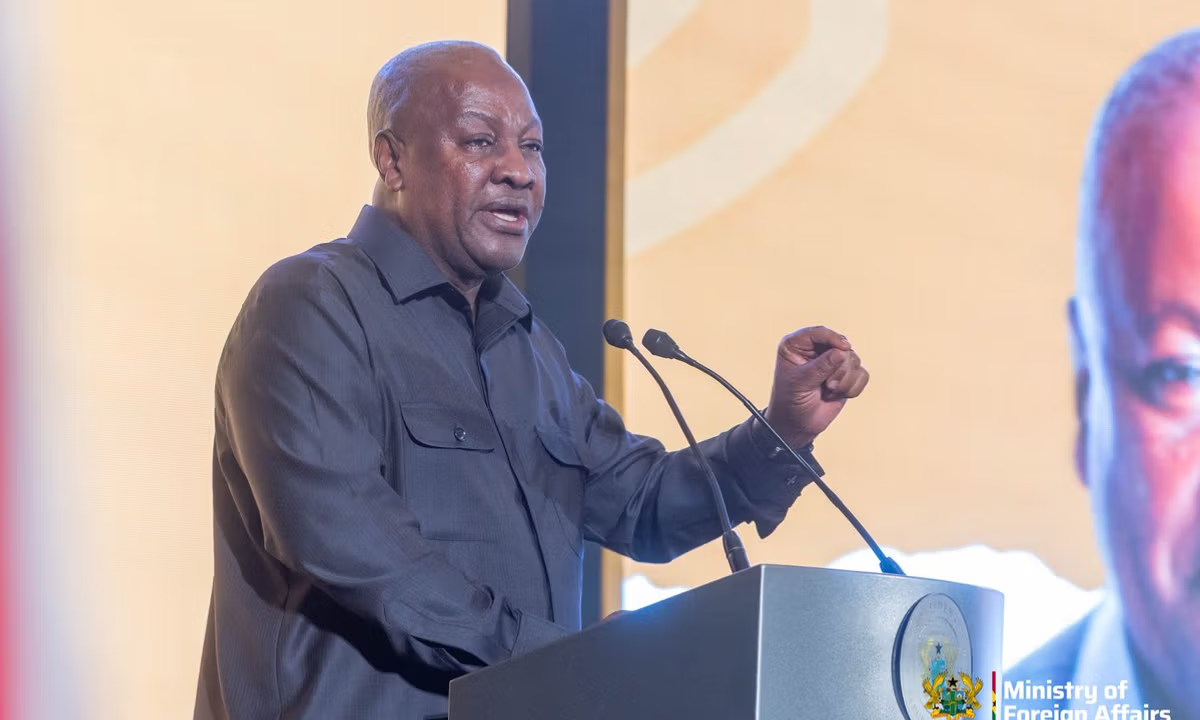
In a symbolic presentation, the catalogue of 2,000 objects that the Netherlands plans to return was handed over by Jeroen Verheul, the country’s ambassador, to John Dramani Mahama, the president of Ghana, during the three-day Next Steps Conference in the Ghanaian capital of Accra last week (17-19 June). The German government has also identified items linked to the Kpando traditional area for return, according to Ablakwa. Further details on the objects that will be restituted from both Germany and Netherlands are yet to be announced.
“The government [of the Netherlands] considers such requests part and parcel of a much needed process of addressing historical injustices,” said Verheul at the conference. “Returning objects often provide a positive boost to cultural and museum cooperation allowing us to tell these important stories together.”
Verheul added: “Our policy [on restitution] is demand driven. The process begins when a country requests the return of an object that it considers its own. We regard it as our duty to make our collections transparent through digitisation and publication including available provenance information.”
According to a Ghanaian government statement the conference sought to create “a common framework of actionable commitments” in response to a landmark United Nations (UN) resolution that was passed on 26 March, which declares the transatlantic slave trade the “gravest crime against humanity”. The UN vote was led by Ghana.
Speakers at the conference, which was hosted by Mahama, included Mia Amor Mottely, the prime minister of Barbados and Bassirou Diomaye Faye, the president of Senegal. There was also a recorded message by the French president Emmanuel Macron. Some of the aims and issues addressed during the conference included a global strategic framework for reparatory justice, which includes establishing an expert panel on restitution of cultural artefacts.
The last day of the conference included the celebration of Juneteenth (an annual commemorative day for the abolition of slavery in the US) and a re-enactment of the slave trade at the Christiansborg Castle in Accra, which was once a major slave trade centre in Ghana. Ablakwa also announced that the government of Denmark have agreed to help preserve the castle, which they built in 1661, so that it “withstands as enduring evidence of the atrocities that occurred”.
In recent years, European countries including France, Germany and the Netherlands have introduced policies to make restitution easier. This has resulted in returns to African countries including Ghana, Benin and Nigeria.
