

Close Menu
  • News
  • Stocks
  • Bonds
  • Commodities
  • Collectables
    • Art
    • Classic Cars
    • Whiskey
    • Wine
  • Trading
  • Alternative Investment
  • Markets
  • More
    • Economy
    • Money
    • Business
    • Personal Finance
    • Investing
    • Financial Planning
    • ETFs
    • Equities
    • Funds

Subscribe to Updates

Get the latest markets and assets news and updates directly to your inbox.

Trending Now

Pace Gallery Founder Arne Glimcher Criticizes Met Museum Over Planned Galliano Show: Report

August 29, 2026

Chief Executive of Sydney’s Forthcoming $915 M. Cultural Institution Steps Down Amid Ongoing Investigations, 10 Weeks Ahead of Its Opening

August 29, 2026

Robert Mapplethorpe Foundation Denied Use of Roy Cohn Portrait for New Biography Over Political Concerns

August 28, 2026
Facebook X (Twitter) Instagram
The Asset ObserverThe Asset Observer
Newsletter
LIVE MARKET DATA
  • News
  • Stocks
  • Bonds
  • Commodities
  • Collectables
    • Art
    • Classic Cars
    • Whiskey
    • Wine
  • Trading
  • Alternative Investment
  • Markets
  • More
    • Economy
    • Money
    • Business
    • Personal Finance
    • Investing
    • Financial Planning
    • ETFs
    • Equities
    • Funds
The Asset ObserverThe Asset Observer
Home»Art Market
Art Market

South Korean Museum Returns Two Qing Dynasty Lion Sculptures to China

News RoomBy News RoomJuly 23, 2026
Share
Facebook Twitter LinkedIn Pinterest Email

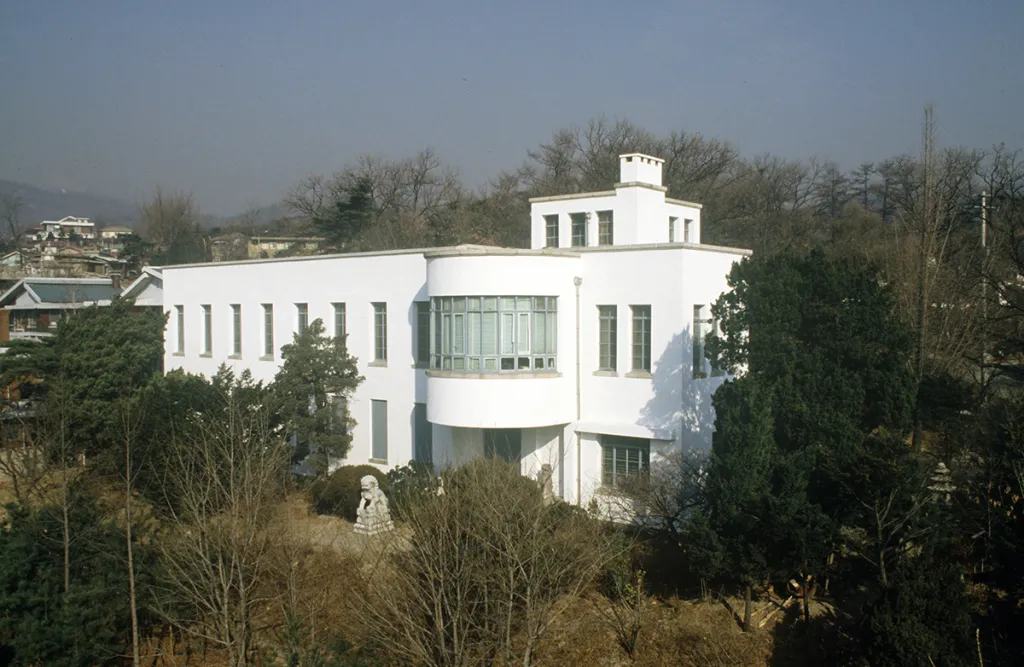
On July 23, the Kansong Art Museum in Seoul hosted a ceremony to mark the return of two Qing Dynasty stone lion sculptures to China. According to a report in the South Korean publication Yonhap News Agency, the ceremony was attended by Chun In-keon, director of the Kansong Art Museum, You Hong-june, director of the National Museum of Korea, Dai Bing, the Chinese ambassador to South Korea, and Rao Quan, head of China’s National Cultural Heritage Administration. The lions’ return had been arranged at a meeting between the two countries in early January.

The statues were purchased by Jeon Hyeong-pil, a Korean art collector and philanthropist, from an auction in Osaka, Japan, in 1933. Jeon (who also went by the name of Kansong, or Gansong in Korea) established the Bohwagak museum five years later, in 1938. According to the museum’s website, its purpose was to preserve Korean cultural artifacts, especially in response to Japanese Imperialist policies. Jeon died in 1962, at which point his son and other relatives took over the collection, eventually changing its name to the Kansong Art Museum in 1966.

The collection includes examples of calligraphy, painting, ceramics, metal- and stonework. The museum’s website categorizes 11 objects as “national treasures”: 15th-century battle records, 12th- and 13th-century celadon objects, two bronze Buddhas, and a white porcelain vase.

The lions themselves are sitting on their haunches on tall plinths and have menacing expressions. They are each over 6 feet tall and weigh over a ton. They have been a fixture at the museum for almost a century, and currently stand on either side of the museum’s entrance. China plans to restore the sculptures and display them at a national museum within a year. Dai, the Chinese diplomat to Korea, saw this event a positive sign of future collaboration. “I believe the two countries can expand various cooperation and exchanges regarding displaced cultural heritage and enhance friendly sentiments between their peoples,” he said at the ceremony, according to Yonhap.

On the homepage is a black-and-white photo of two smiling stone tigers. These statues will replace the lions once they make their way back to China.

Share. Facebook Twitter Pinterest LinkedIn Tumblr Email

Keep Reading

Pace Gallery Founder Arne Glimcher Criticizes Met Museum Over Planned Galliano Show: Report

Chief Executive of Sydney’s Forthcoming $915 M. Cultural Institution Steps Down Amid Ongoing Investigations, 10 Weeks Ahead of Its Opening

Robert Mapplethorpe Foundation Denied Use of Roy Cohn Portrait for New Biography Over Political Concerns

Robert Indiana’s Maine Home Is for Sale, Despite Late Artist’s Intentions to Make It an Art Space

Rotterdam’s Museum Boijmans Van Beuningen Embroiled in Alleged Bribery Scandal

China Pulls Artists from Gwangju Biennale as ‘Taiwan Pavilion’ Moves Forward

Guatemala museum that suddenly shuttered after court-ordered raid to reopen – The Art Newspaper

An Art Lover’s Guide to Seoul

UK Government Puts Temporary Export Ban on $97.2 M. Rembrandt Painting

Recent Posts
  • Pace Gallery Founder Arne Glimcher Criticizes Met Museum Over Planned Galliano Show: Report
  • Chief Executive of Sydney’s Forthcoming $915 M. Cultural Institution Steps Down Amid Ongoing Investigations, 10 Weeks Ahead of Its Opening
  • Robert Mapplethorpe Foundation Denied Use of Roy Cohn Portrait for New Biography Over Political Concerns
  • Crypto Market Update: Bitcoin’s Best August Since 2017 Breaks Historically Bearish Pattern
  • Robert Indiana’s Maine Home Is for Sale, Despite Late Artist’s Intentions to Make It an Art Space

Subscribe to Newsletter

Get the latest markets and assets news and updates directly to your inbox.

Editors Picks

Chief Executive of Sydney’s Forthcoming $915 M. Cultural Institution Steps Down Amid Ongoing Investigations, 10 Weeks Ahead of Its Opening

August 29, 2026

Robert Mapplethorpe Foundation Denied Use of Roy Cohn Portrait for New Biography Over Political Concerns

August 28, 2026

Crypto Market Update: Bitcoin’s Best August Since 2017 Breaks Historically Bearish Pattern

August 28, 2026

Robert Indiana’s Maine Home Is for Sale, Despite Late Artist’s Intentions to Make It an Art Space

August 28, 2026

Crypto Market Update: Bitcoin Consolidates Amid Mixed Whale Activity

August 28, 2026
Facebook X (Twitter) Instagram
© 2026 The Asset Observer. All Rights Reserved.
  • Privacy Policy
  • Terms
  • Press Release
  • Advertise
  • Contact

Type above and press Enter to search. Press Esc to cancel.