


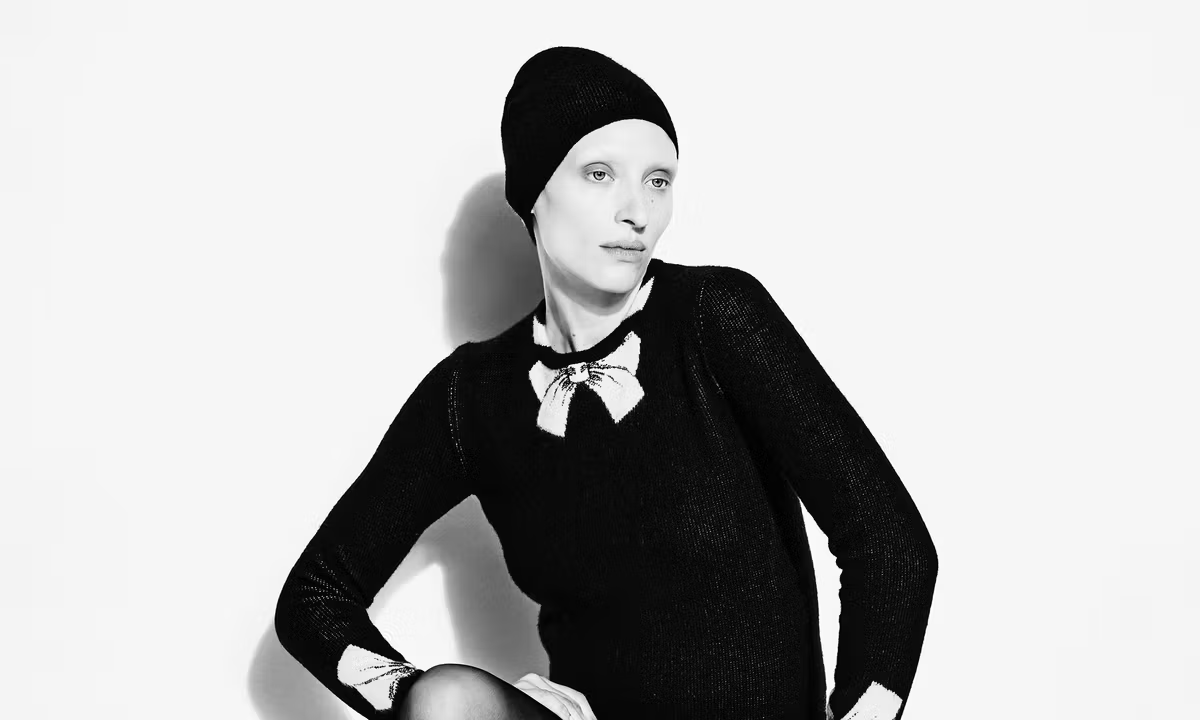
The most surprising exhibit in London’s Victoria and Albert Museum (V&A)’s latest blockbuster fashion show, which opened on 28 March, is a radically quiet sweater. Fine-gauge yarn in stockingstitch, it is black with white strands that float across the rows inside and caught every few stitches so a spark shows. At the neck is a naive sketch of a collar with a soft bow—a black outline filled in with white. It is almost a century old, yet perpetually modern.
Schiaparelli, photographed for Harper’s Bazaar in 1935, in her Paris boutique Photo: François Kollar © GrandPalaisRmn—Copyright management by François Kollar
The sweater changed the life of Elsa Schiaparelli, and Paris fashion, as her designs made interactive the latest art movements and haute couture. The V&A show tells this under-known story, and explains her once pre-eminent role: in the late 1920s and 1930s Schiaparelli was the present, and possible future, of fashion, while her rival, Gabrielle “Coco” Chanel, had begun to feel like its recent past.
Unlike Gabrielle Chanel’s “poor seamstress, rich men’s mistress” origin story, Schiaparelli was born a somebody—in Rome in 1890 to an aristocratic mother and an academic father, both of whom were wealthy. By the age of 24, she had become a renegade daughter, then wife, mother and divorcée of a conman husband on the run in the UK and US. In 1927, she was 37 and back in Paris with easy access to the city’s most provocative art circle, where Dadaist absurdity had been supplemented by Surrealist fantasy.
Schiaparelli didn’t simply borrow from Surrealism; she translated it into real life
Francesco Pastore, Schiaparelli
Schiaparelli was also welcome among a smart crowd that included Americans in France for art, fashion and fun. The couturier Paul Poiret, who in the pre-war years had uncorseted, unlayered and de-upholstered women’s bodies, encouraged her fizzing thoughts about clothes. She could not sew, pattern-cut or mould hats, and her early experiments to wrangle a dress by draping fabric on her own body were hit and miss. Still, the flow of her ideas was unstoppable.
One of these ideas was to commission a sweater similar to one she had seen on a friend, which kept its shoulder-to hip-cylinder shape—1927’s ideal silhouette—and neither clung nor sagged. The inside strands were its steady-state secret. The friend introduced Schiaparelli to its knitter, an Armenian refugee called Aroosiag “Mike” Mikaëlian. Schiaparelli briefed Mikaëlian through a translator, gave her a drawing of the bow that she called “child-like”, and the pair persevered until Mikaëlian realised Schiaparelli’s demand. And there it was, an elegant joke about the real/unreal. “Schiaparelli didn’t borrow from Surrealism; she translated it into real life,” says Francesco Pastore, the head of heritage and culture at the Schiaparelli fashion house, which was revived in 2012 and has been under the creative direction of Daniel Roseberry since 2019.
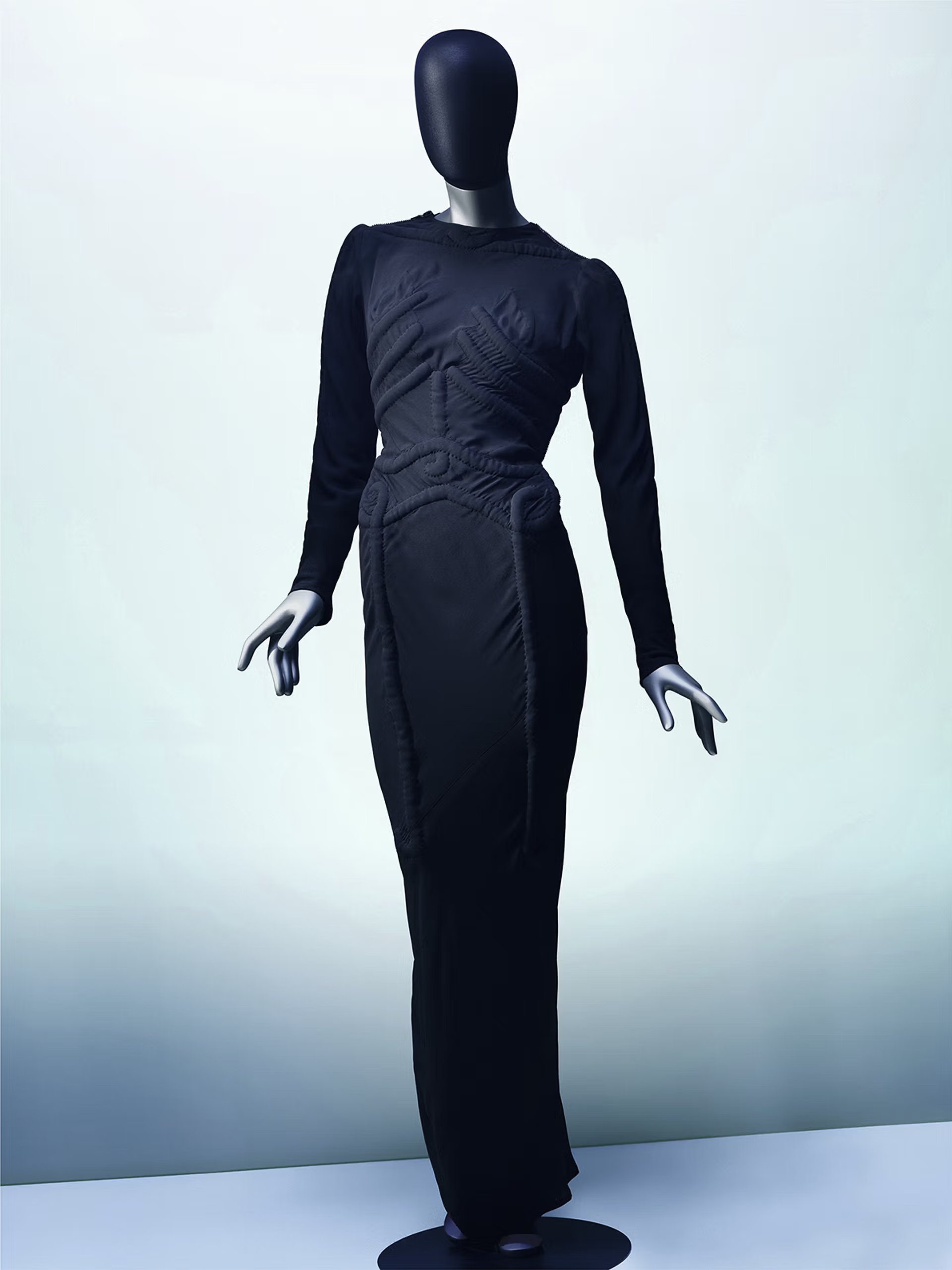
The Skeleton Dress, designed by Elsa Schiaparelli and Salvador Dalí in 1938 Photo: © Emil Larsson; V&A © 2025; Salvador Dalí, Fundació Gala-Salvador Dalí, DACS
Schiaparelli achieved this through graphic designs: animated cartoons were one of the key entertainment forms in the 1920s. It was no coincidence that, also in 1927, Walt Disney debuted Oswald the Lucky Rabbit, the precursor of Mickey Mouse, creating a world where characters’ bodies and clothes are a unified image. Schiaparelli herself posed cartoon-style in photographs, and her famous knitted “Mad Cap” hat could be worn a hundred crazy ways to reshape a head, just like animation.
The first fast fashion
That original, almost abstract sweater was physically manifested through collaboration with one of Paris’s craft businesses, many of which were led by gifted decorative artists. When Schiaparelli wore her trophy to a lunch, the buyer for a US department store put in an order for 40 to be delivered in a fortnight, each accompanied by a neat pleated skirt. Schiaparelli bought the skirt fabric at the bargain counter at Galeries Lafayette, Mikaëlian consigned the knitting to every competent pair of hands in her diaspora community, and the sweaters went to New York, where the idea was copied at decreasing prices by hand, machine and a DIY pattern. You could say it pre-empted the idea of instant fashion, worn to be in the moment.
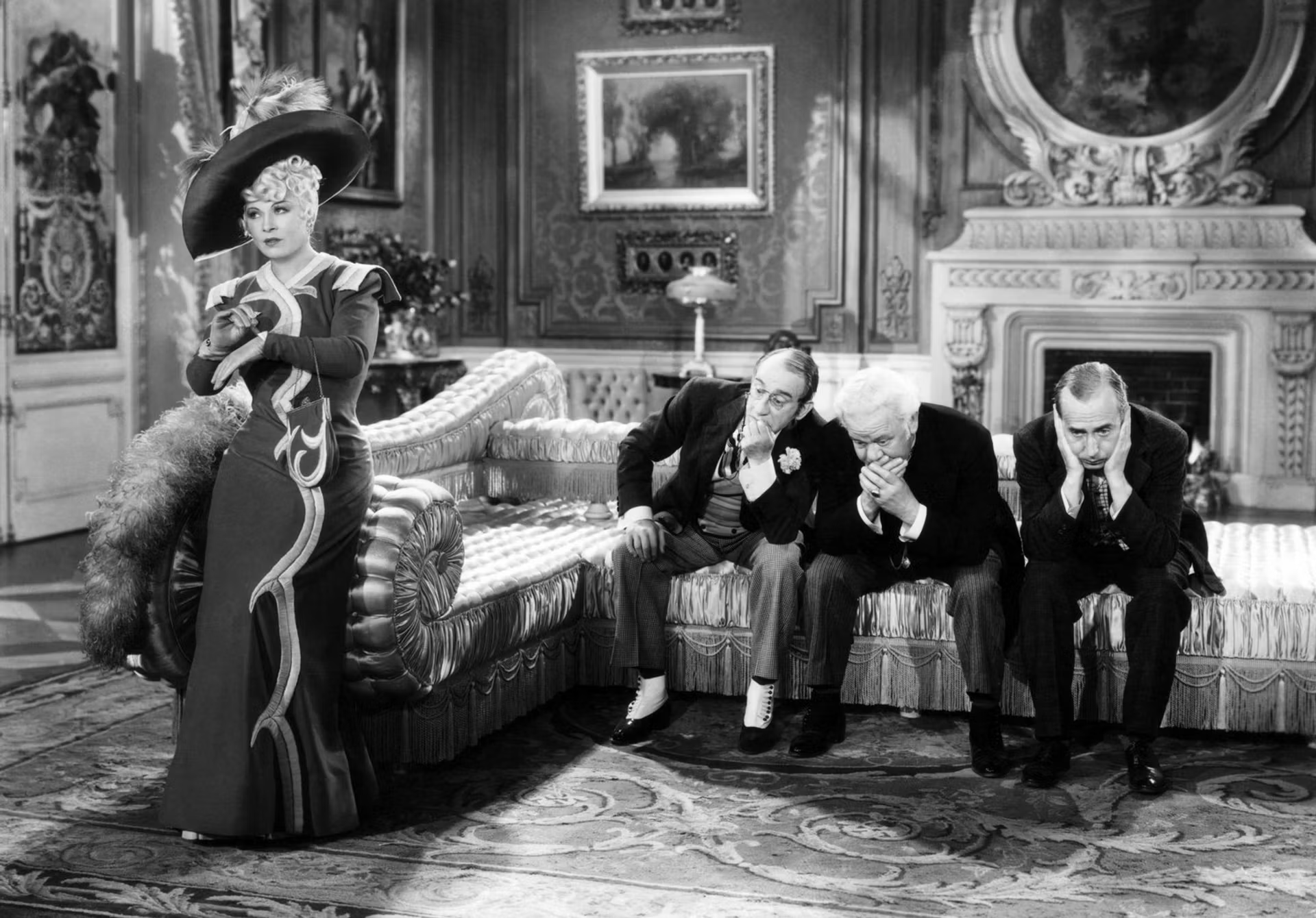
In the 1937 film, Every Day’s a Holiday, Mae West wore a Schiaparelli design Moviestore Collection Ltd/Alamy Stock Photo
Schiaparelli founded her business as a high-end sportswear boutique on sequential developments of the sweater, expanding her graphics to accessories and her knits into complex textures, which anticipated the unusual surface-patterned weaves she began to commission from major fabric houses—and to popularise. Almost a generation before, the similarly untrained Chanel had also entered couture boldly by designing sportif cardigans over dresses and skirts in humble machine-knit jersey. Their poverty-deluxe simplicity appealed to the mobile young.
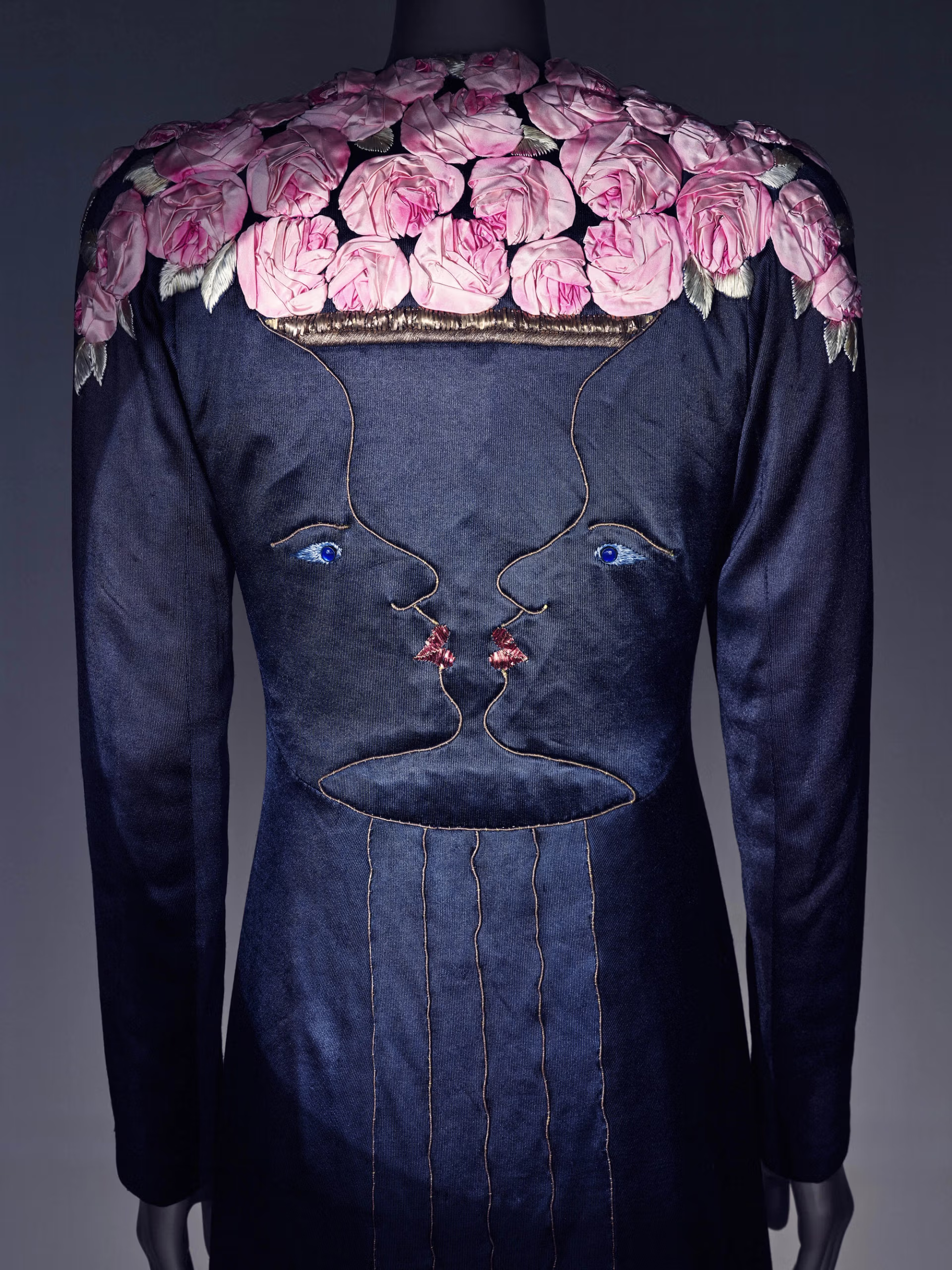
In 1938 Schiaparelli created a coat with Jean Cocteau Photo: © Emil Larsson; © 2025 ADAGP DACS Comite Cocteau, Paris
Chanel confined her interest in art to the patronage of creators including the Ballets Russes impresario Sergei Diaghilev, and called the upstart Schiaparelli—as she evolved into a full couture house—“that Italian artist who makes clothes”. The jibe was meant to mock, but in fact it was accurate. Schiaparelli was an artist, fecund with ideas from a backlog of all that she had absorbed in a curious life, plus fast reactions to the latest discoveries. Amusing concepts flowed out of her into the skilled hands of makers: tweeds woven with feathers and swimsuits with built-in bras. Zodiac embroideries came from a childhood interest in astrology, while plastic zip fasteners were displayed prominently. Costume jewellery was composed of mirror shards and a cape was made of clear cellophane. Pastore says that, with Schiaparelli, the “unconscious became wearable”.
Schiaparelli’s use of artists’ imagery went beyond decoration. It was shared imagination
Francesco Pastore, Schiaparelli
Her creations were worn to express ready wit and the self-confidence to carry off a joke. The “hard chic” of the 1930s suited sophisticates such as the scandalous Daisy Fellowes and the divorcée Wallis Simpson, who became the Duchess of Windsor; in Picasso’s 1937 portrait of Nusch Éluard, the poet Paul Éluard’s wife is wearing Elsa’s designs. Schiaparelli’s challenging clothes were for women who bit back and bantered, and were much copied in Hollywood for the leading screwball comedians. She designed costumes for Mae West, although she had to merge West’s burgeoning curves into the set décor and blur them with fur and feathers. Now Roseberry’s provocative creations seem in tune with Schiaparelli’s showgirl—or show-woman—manner, as well as her desire to push things to an extreme.
Astound, not seduce
Schiaparelli herself preferred to astound rather than seduce. Where Jean Cocteau’s sketches for Chanel were alluring portraits of Coco herself, the drawing he gave to Schiaparelli—profiles of two girls outlining a vase—was immediately translated into a garment via the embroidery genius Albert Lesage. Stitchery outlines the profiles on the back of an evening coat, and fat ribbon-embroidery roses puff from the vase. “Schiaparelli’s use of artists’ imagery went beyond decoration,” Pastore says. “It was shared imagination. While her friend Salvador Dalí painted figures with blossoms for heads… Schiaparelli herself, as a child, had once placed flower seeds in her nose and mouth hoping to grow beautiful flowers from her face.”
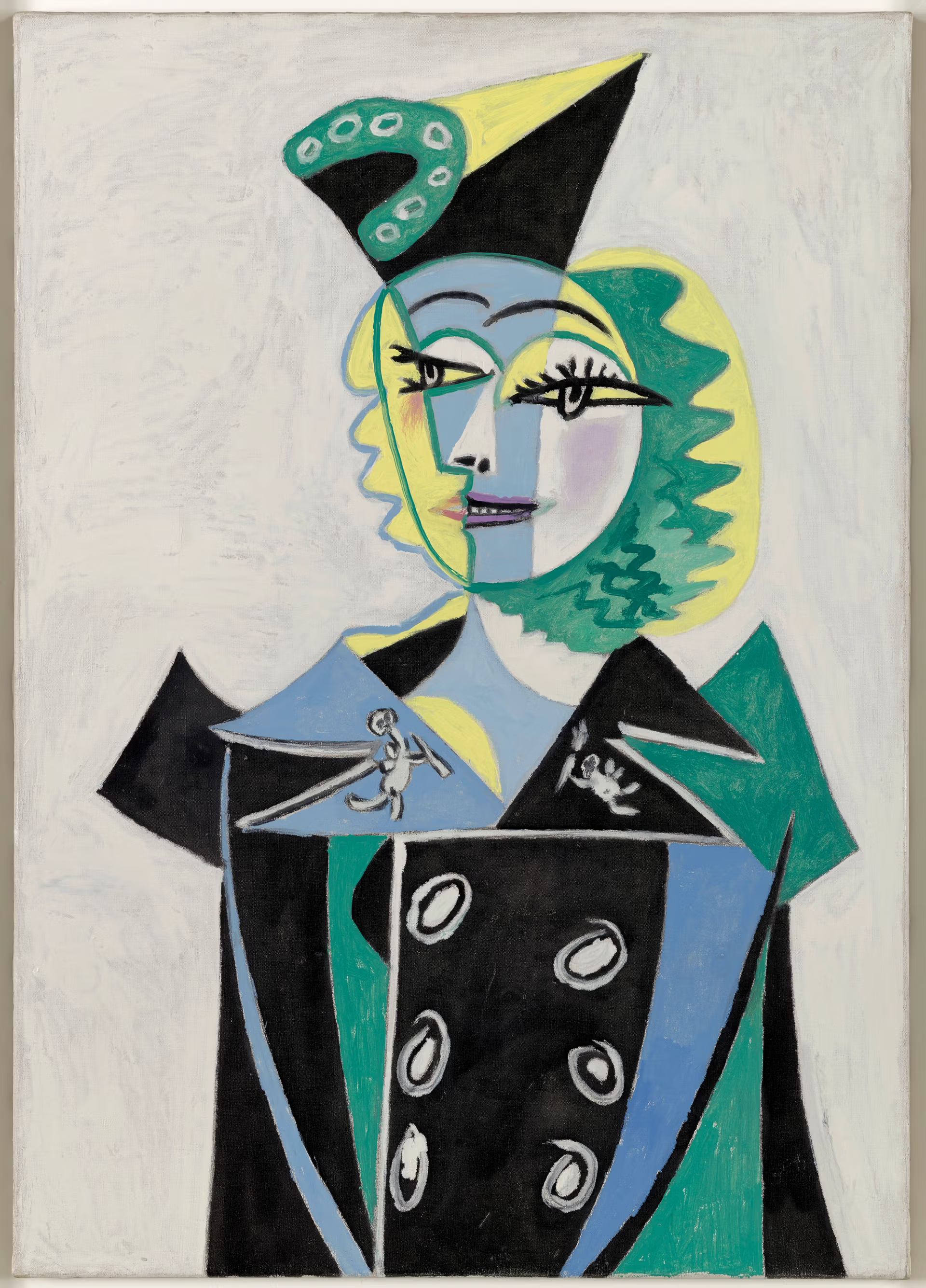
Picasso’s Portrait of Nusch Éluard (1937), dressed in a
Schiaparelli design Photo: Adrien Didierjean; © GrandPalaisRmn (Musée national Picasso, Paris)
The Lesage-Schiaparelli collaboration was crucial to her collections because, as Pastore says, she believed that working at the intersection of “artists and artisans was exhilarating”, and saw the exchange as part of invention, not execution. With Dalí, she created the Skeleton Dress that opens the V&A show. Meanwhile, Lesage’s interpretations for Schiaparelli are lighter than the dense encrustations of sequins and beads that have come to dominate couture embroidery today, with its women-workhours visibly accountable. Simple silk stitches paint in the prancing horses on the boleros of
Schiaparelli’s Circus collection, and ringside “curtains” are swept back with real tassels. They are an unexpected torso embellishment, a precursor of the now omnipresent graphic- printed T-shirt.
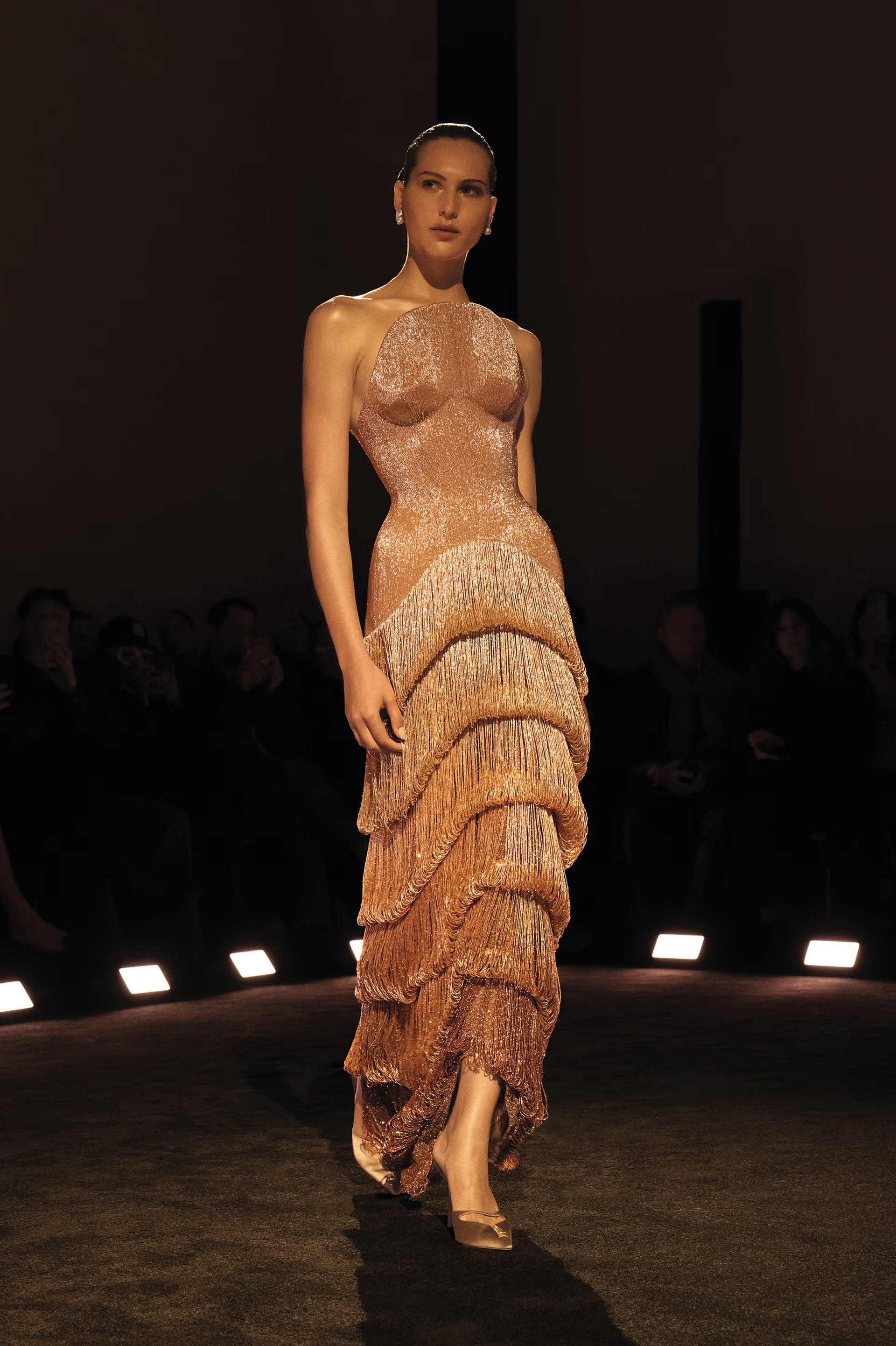
Daniel Roseberry, Schiaparelli’s current creative director, has continued its creator’s ethos of designing to provoke, as seen most recently in its spring/summer 2026 collection © Schiaparelli
Some Circus jackets seem to close with buttons moulded and painted as, say, trapeze artists, though the actual fastening hidden beneath is a metal hook and bar. As well as her constant quest for experimental textiles in new dye formulas (her introduction of “shocking pink” did just that, and was not at first easy to produce), Schiaparelli enjoyed devising three-dimensional objects for women to wear and carry, sometimes in collusion with artists. With Dalí, she made the famous shoe-shaped hat, heel aloft.
But when you visit the exhibition, be sure to peer closely at the buttons which go far beyond clever novelties. Pastore calls them “miniature artworks…not decorative additions but structural punctuation marks”. Made by sculptors of the miniature, including Gisèle Favre-Pinsard and François Hugo, these droll Surrealist jokes are like the flotsam and jetsam of the unconscious mind in a hedonic time, popping in high relief on a plain, tailored suit. There are beetles, butterflies, snails, candelabra, grand pianos, mermaids, padlocks—and even the plastic handles on a garment realised from a Dalí drawing of a woman as a chest of drawers.
As the reality of the Second World War loomed over Paris in 1940, Schiaparelli delivered a last collection before her exit to the US, which featured enormous box pockets, flapped, brass-buttoned and flourished with Lesage gold scrolls. They turned out to be a farewell. When she returned to post-war France, fine art applied to clothes was no longer a desirable mode. Schiaparelli retired in 1954, the year Chanel reopened her house.
• Schiaparelli: Fashion Becomes Art, Victoria and Albert Museum, London, until 1 November
