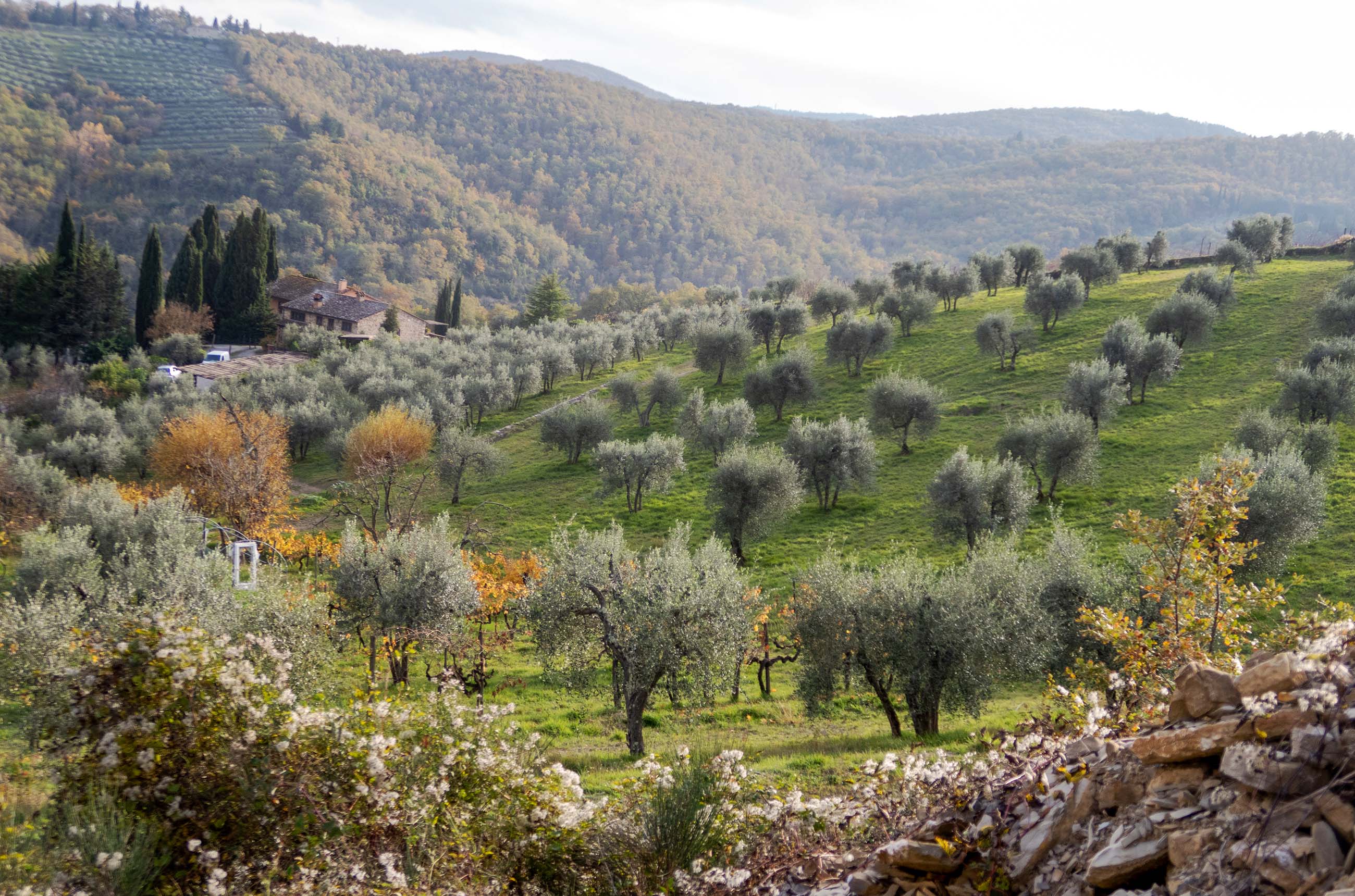
Just before dawn, the hills of Piedmont look half‑formed, as if the fog is still deciding what to reveal. We pull up at the edge of a small wood, and Macchia (‘Spot’) the dog hops out of her pillowed nest in the back seat of a mud‑spattered Fiat Panda 4×4.
Michele – one of Alba’s most respected trifulau – leads us into the quiet trees. Macchia, a cheerful dog with quick paws, trots ahead, nose low, tail slicing the mist like a metronome.
The ground is soft underfoot, a quilt of wet leaves; the forest air is cool and heavy, rich with the soft musk of wild mushrooms, rain‑darkened foliage, moss, damp bark, and a faint thread of distant woodsmoke.
‘The forest smells different when a truffle is close’
‘Macchia always knows before I do. The forest smells different when a truffle is close,’ Michele whispers, as if loud words might unsettle any treasures buried beneath our feet.
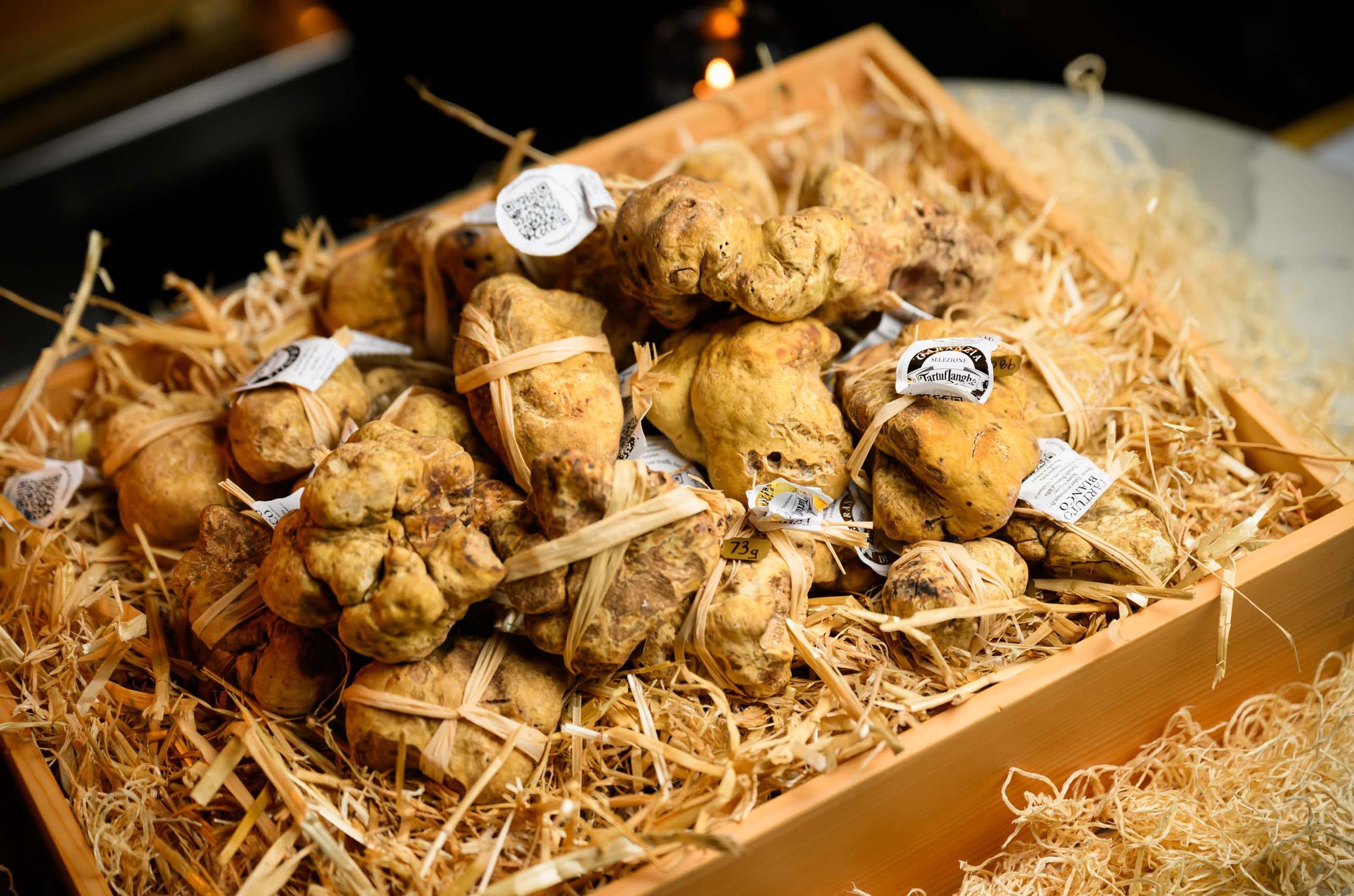
We’re searching for Tuber magnatum Picco, the white truffle of Alba – ‘white gold’, as the locals call it.
What I learn over the next few days, as I follow Michele and Macchia through the waking woods, is that beyond their earthly allure, truffles awaken something in us, activating neural pathways in ways science is only just beginning to understand.
Hijacking the dog’s brain
In a way, dogs like Macchia are the truffles’ first victims. The fungus hijacks their brains long before it hijacks ours.
As we walk deeper into the woods, Michele tells me that training begins when dogs are mere pups, still nursing.
‘When the puppies are newborn, we scent the mother’s teats very lightly with truffle oil,’ Michele explains. ‘Just enough so that the first smell they associate with comfort and feeding is the smell of truffle.’
The olfactory bulb in dogs is proportionally 40-times larger than in humans, and their scent memory is astonishingly durable. What humans experience as a fleeting perfume, dogs experience as a map, a story.
The first whiffs of truffle a newborn puppy perceives become associated with nourishment, warmth and safety, forming lasting pathways in its neural circuitry.
‘When they smell truffles later, even years later, it wakes up something from when they were tiny. It’s the memory of their mother. They can’t ignore it,’ says Michele.
Once the puppies are weaned, the training becomes more deliberate. Michele hides small pieces of truffle in cloth pouches and buries them shallowly in the soil.
The dogs learn to dig gently, using only their paws, never their teeth. They’re taught patience, restraint, and the subtle art of the hunt.
‘When Macchia catches a trace of truffle, her entire posture changes’
‘For the dog, the joy is in the digging. The truffle is the prize, yes, but the hunt – that’s what they love,’ Michele says, watching Macchia zigzag through the underbrush.
Macchia is a Lagotto Romagnolo, the curly‑coated breed famous for its truffle‑hunting prowess. But Michele is quick to point out that the breed alone doesn’t make a hunter.
‘Lagotti are wonderful dogs,’ he says. ‘But when it comes to finding truffles together, what matters is the bond. Your dog is your partner. The dog has to want to work with you, not for you.’
When Macchia catches a trace of truffle, her entire posture changes. Her tail stiffens, her breathing shifts, her gait becomes laser‑focused.
This is dopamine at work – the neurotransmitter of anticipation; the same reward circuitry that fires in humans when we smell truffles also fires in dogs when they search for it.
‘Watch her paws’, says Michele.
Macchia begins to dig with a practiced, almost delicate rhythm. Each stroke is measured carefully, as if she understands the value of what lies beneath.
The earth loosens, dark and fragrant, releasing a faint, humid warmth. Michele kneels and places a hand gently on the dog’s flank.
‘She knows when to stop. That’s the difference between a good dog and a great one,’ he says.
And then, there it is: a pale, knobbly orb no larger than a walnut, streaked with the faint marks of the forest.
When Macchia steps back, Michele takes over, brushing away the last layer of soil with his fingers. Up close, it looks less like a fungus and more like a tiny buried relic.
‘Every truffle is a little treasure’, he says. ‘Its whole life is written on the surface: snail trails, a gentle scratch from a dog’s paw, tiny fissures from the earth pressing and releasing, even the imprint of the roots it grew against.’
Why we can’t resist truffles
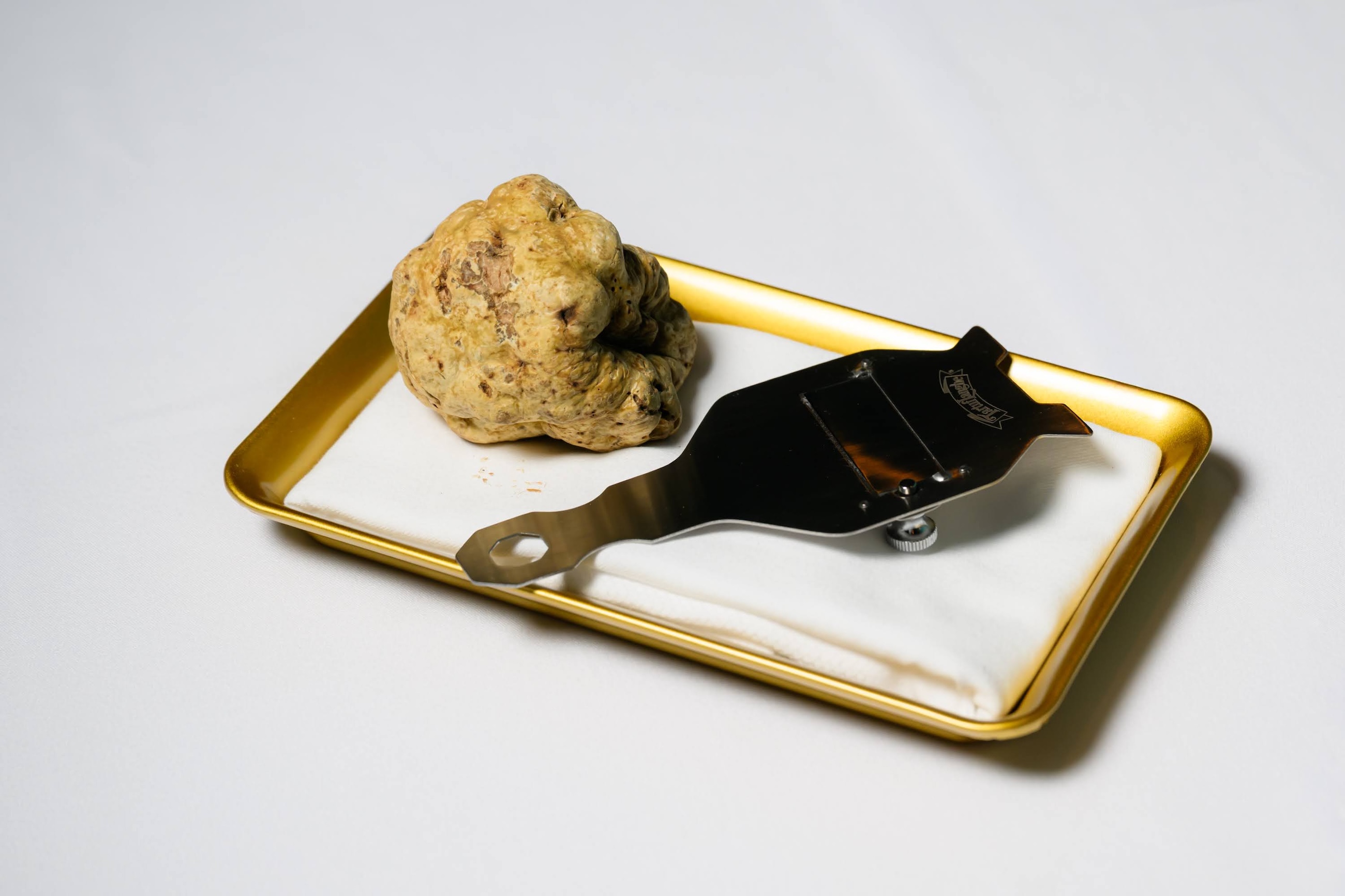
In 2025, a Hong Kong bidder paid €110,000 for a 1.009‑kilogram Alba truffle at the World Truffle Auction, hosted in the elegant castle of Grinzane Cavour.
To understand why people pay thousands – or tens of thousands – for these subterranean wonders, you have to understand how scent works.
‘Unlike sight or sound, smell bypasses the brain’s usual filters,’ says Paul J. Zak, founding director at the Center for Neuroeconomics Studies, Claremont Graduate University.
‘Odour molecules travel straight from the olfactory bulb to the amygdala, hippocampus, and orbitofrontal cortex, the regions responsible for emotion, memory and reward respectively.
‘Scent is the only sense that is not gated through processing pathways: the olfaction response communicates directly to areas in the brain that process emotions.’
‘2,4-dithiapentane is considered the signature molecule of white truffle’
Paolo Montanaro, CEO of Tartuflanghe is one of the premier exporters of white truffles in Alba. After pursuing a degree in chemistry at the University of Turin, he joined his father’s company.
‘From a chemical standpoint, the intense and “intoxicating” aroma of white truffle comes from an extremely complex mixture of volatile compounds – over 100 different molecules – that readily evaporate and reach our olfactory system,’ he explains.
‘Sulphur-containing compounds are the primary drivers: they contribute earthy, cabbage-like, garlicky, and aged cheese notes, and are highly potent even in trace amounts.
Among them, 2,4-dithiapentane is considered the signature molecule of white truffle, responsible for its most characteristic, penetrating, sulphurous aroma.
‘Truffles also contain compounds such as androstenone and androstenol, which are structurally similar to mammalian pheromones.
’These molecules have musky, animal-like notes and contribute to the seductive and persistent quality of the aroma.
‘They also explain why animals such as pigs and dogs are naturally drawn to truffles, as they are particularly sensitive to these compounds.’
Truffle paradox
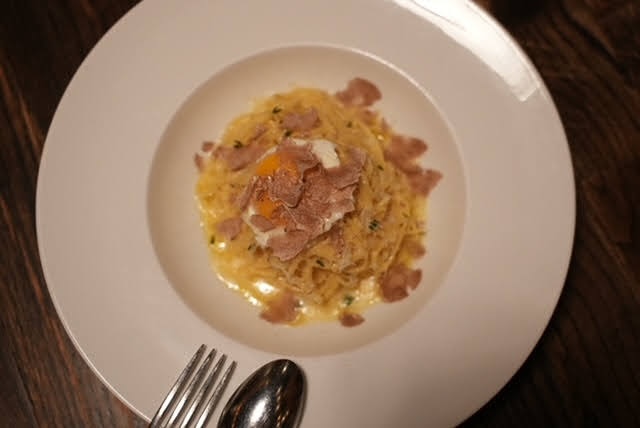
There’s a paradox at the heart of truffle lust: these aromas – musk, damp earth, decay – should repel, yet they signal luxury.
At restaurants across Alba, white truffles are shaved over agnolotti del plin, melted into silky fonduta, and even curled into thin petals atop creamy gelato.
‘Rare or unusual scents are more sought after because new things enable humans to acquire new information that could help them survive or reproduce,’ notes Zak.
‘The brain always puts higher value on the “new, new thing”. It’s plausible that attraction to earthy, musky, and sulphurous compounds helped early humans identify food sources, assess food safety, and interpret environmental signals. Today, this same sensitivity contributes to the appeal of truffles.’
Novelty, rarity, and complexity become intertwined with prestige. Over centuries, cultures have elevate these once‑strange aromas into symbols of sophistication.
Wine and truffles: A fascinating combination
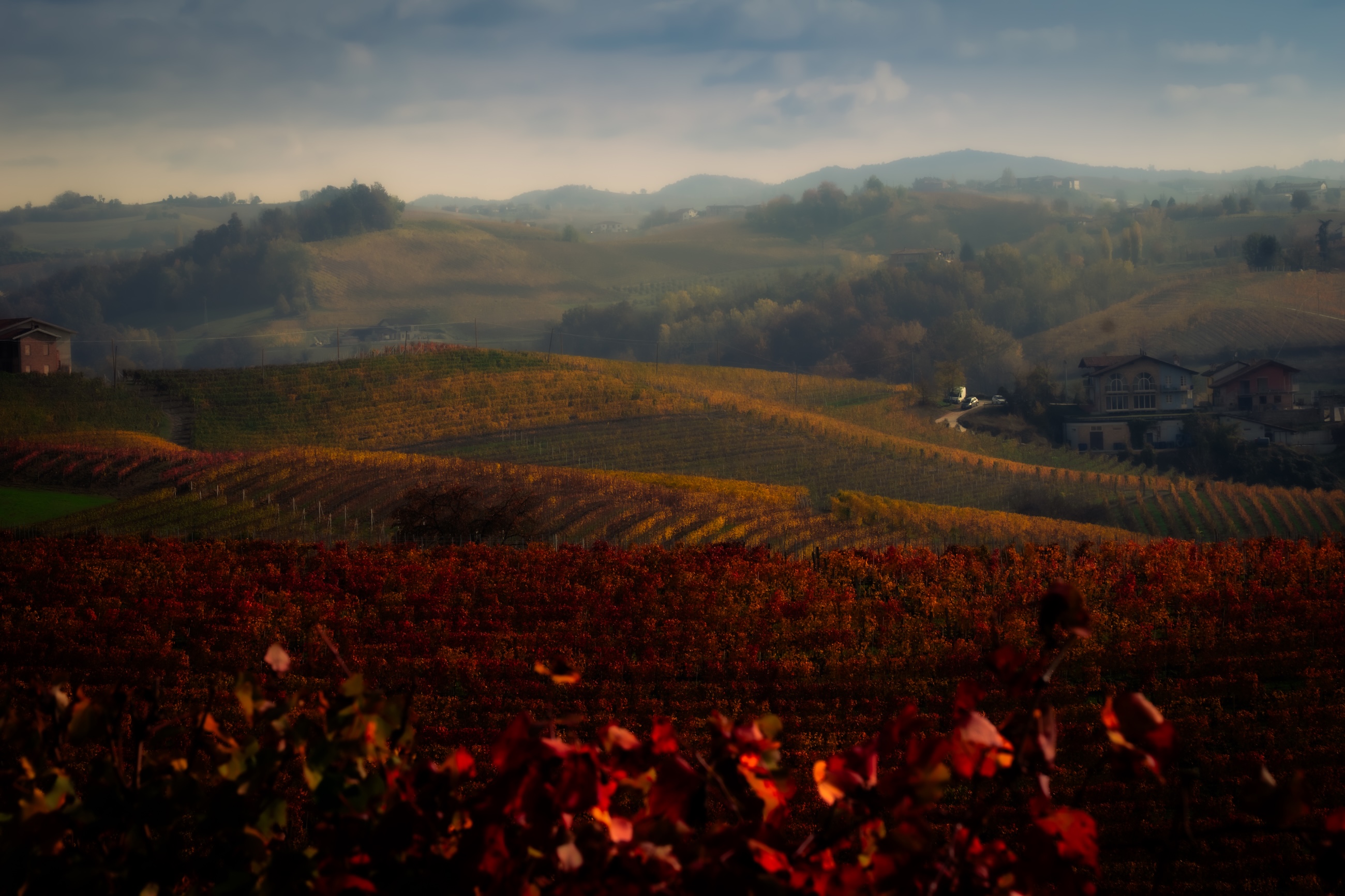
‘Wine and truffles speak the same aromatic language’, says Montanaro.
‘Aged Nebbiolo develops mushroom, underbrush, and dried rose notes, mirroring truffle aromatics: a perfect example of “aroma bridging”.
‘At the same time, the wine’s acidity increases the volatility of truffle compounds and cleanses the palate of fats, so the aroma becomes even more vivid.’
Scientific research shows that soil microbial communities directly influence truffle aroma.
Truffles are mycorrhizal fungi, living in symbiosis with tree roots (oak, hazel, poplar, linden). These roots release nutrients that sustain a microbiome of bacteria, yeasts, and fungi.
‘As in wine, there is a concept of microbial terroir, where differences in soil microbiota influence aroma intensity and complexity,’ Montanaro explains.
‘The final scent is not produced by the fungus alone, but by a complex ecosystem of microorganisms.
‘An experienced nose can identify nuances such as hazelnut notes, honeyed tones from linden trees, the sharper intensity of truffles associated with oak, or more garlicky profiles from specific hills.
‘Soil composition, such as calcareous or clay-rich areas, also contributes to subtle differences in aroma.’
One enduring mystery
The science lingers in my mind, but here, among the roots and leaf litter, it becomes something tangible.
Macchia’s nose twitches; Michele’s eyes scan the ground with the intuition he’s earned from truffle hunting for over 40 years.
When Macchia pauses again, Michele kneels beside her. The two share a look, a tiny exchange of trust, and then he begins to dig with practiced care.
A few moments later, he lifts a truffle from the soil as gently as if it were a living thing. Macchia proudly wags her tail, and Michele’s loving pats and scratches are the payment she expects and so obviously adores.
But for all we’ve learned, truffles remain stubbornly mysterious.
‘We still do not fully understand why, within the same forest or truffle ground, under identical environmental conditions, only certain tree roots develop the symbiotic relationship that produces truffles,’ says Montanaro.
‘It remains, in part, a fascinating mystery’.
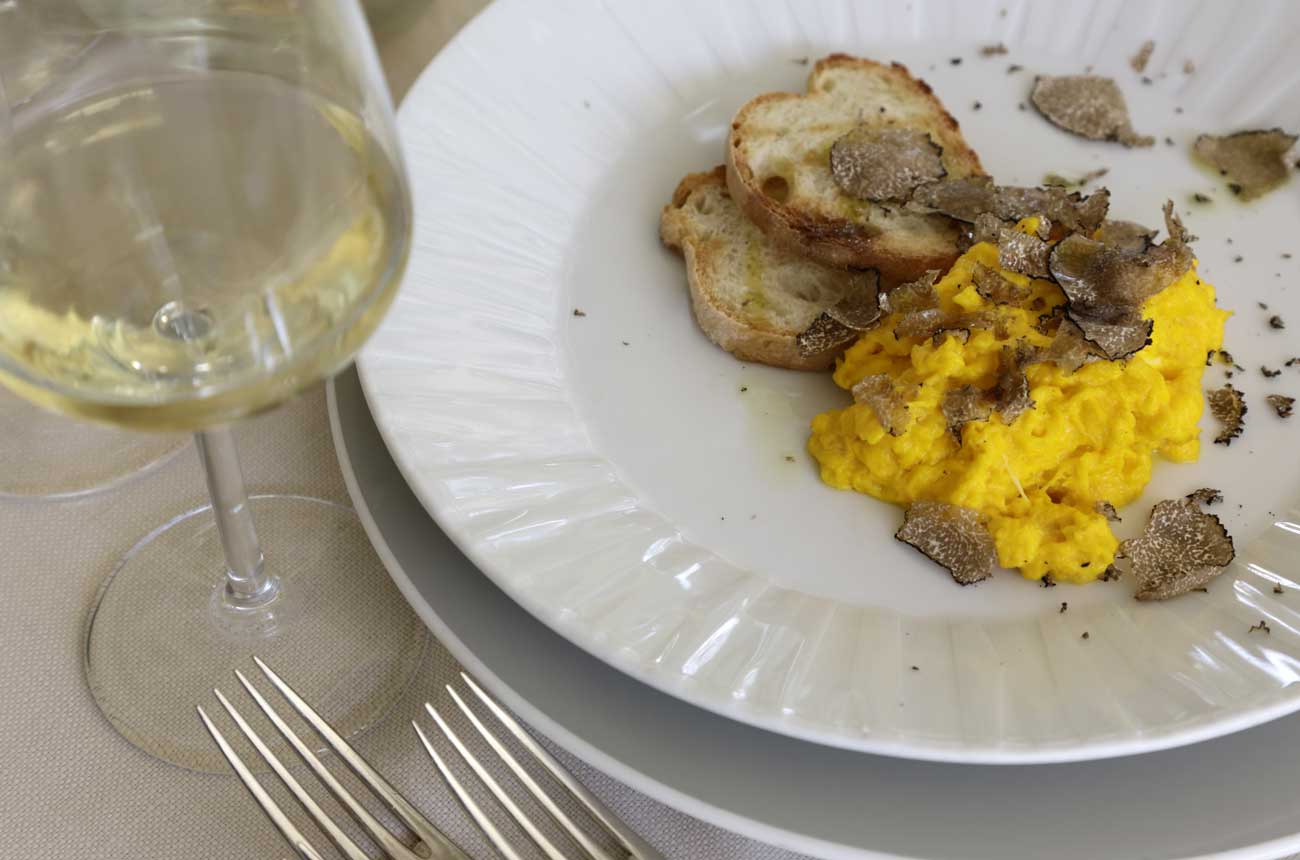
Italian wine and truffle: Pairing advice plus 12 wines to try
Inside VCR, the Italian nursery that supplies a quarter of the world's vines