


We all know the classic doctor-recommended tenets of healthy living—from getting our daily 10,000 steps to eating our “five a day.” Maintaining these habits can help us live longer, healthier, and happier lives.
But recent research has uncovered a new regimen that may help keep our bodies healthier as we age: engaging in the arts.
A University College London (UCL) study into epigenetic aging—the biological deterioration of our cells caused by changes in how our DNA is regulated over time—found that creative and cultural activities may affect aging in a way comparable to physical exercise.
The study defined arts engagement broadly, from singing, dancing, and painting, to visiting exhibitions, museums, and heritage sites.
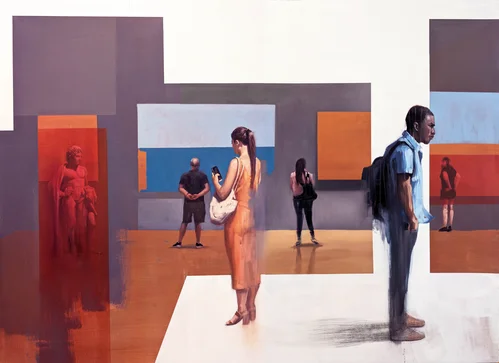
Observing #71, 2023
Matt Lambert (b. 1982)
Gallery Different
The findings add to growing interest in art as a health-promoting behavior. Some countries, including the Netherlands and Greece, have even prescribed art for conditions such as depression and cardiovascular disease.
But UCL’s study is the first of its kind to show such a connection between the arts and biological age. “There is a growing body of work demonstrating that arts engagement is a health-promoting behavior,” said Daisy Fancourt, the lead author of the study and the head of the Social Biobehavioural Research Group at UCL. “ We should promote creative engagement just like we promote 10,000 steps a day or five-a-day of fruits and vegetables.”
The research is part of a £3.5 million ($4.7 million), seven-year program led by UCL and funded by the Wellcome. As that work continues, Fancourt offers five practical ways to make art part of a healthy-aging regimen.
Make creativity a regular habit
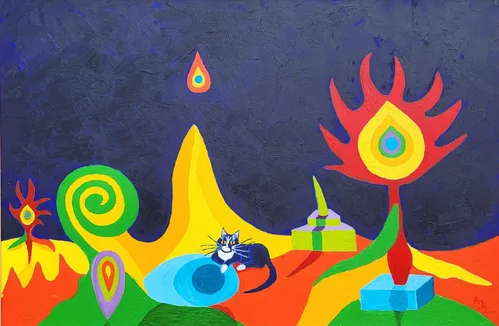
Sleepless creativity, 2021
Aldona Jablonska Klimczak
Art Nou Millenni Gallery
The UCL research has shown that, overall, the more often people engage in the arts, the lower their biological age may be.
In one test, epigenetic aging was 0.8 years lower in people who engaged with the arts weekly and 1.02 years lower among those who did so monthly, compared to those engaging once or twice a year.
“Regular, sustained engagement is key,” said Fancourt. She recommends approaching creativity “little and often” so that it becomes part of everyday life.
That might mean spending a few minutes drawing or painting, doing 10 minutes of crafting, taking photographs during a walk, or listening closely to a concert. The activity does not need to be ambitious or time-consuming to count.
2. Start small with achievable goals
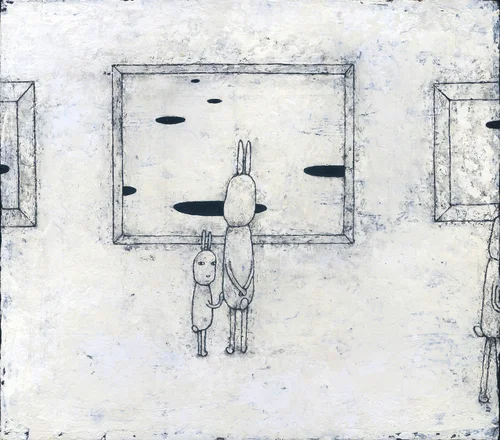
Look, 2015
Rebecca Doughty
The Schoolhouse Gallery
Fancourt warns against “bingeing on art.”
“Just as with crash food diets, you should avoid making major changes to your art ‘intake’ straight away,” she said. “Don’t feel you need to start dozens of new artistic hobbies or sign up to daily art classes, as big behavioural adjustments rarely last. “
Instead, set small, achievable goals for creative tasks that fit naturally into your daily routine.
It can also help to schedule artistic activities for times when you tend to feel stressed, sad, tired, or lonely. Like exercise, engaging with art can lift both mood and energy levels, Fancourt says.
“In the same way that we structure our food intake to recharge our batteries, you can use art, music, reading, and culture to help regulate your energy or mood,” she told Artsy.
3. Mix up your art diet
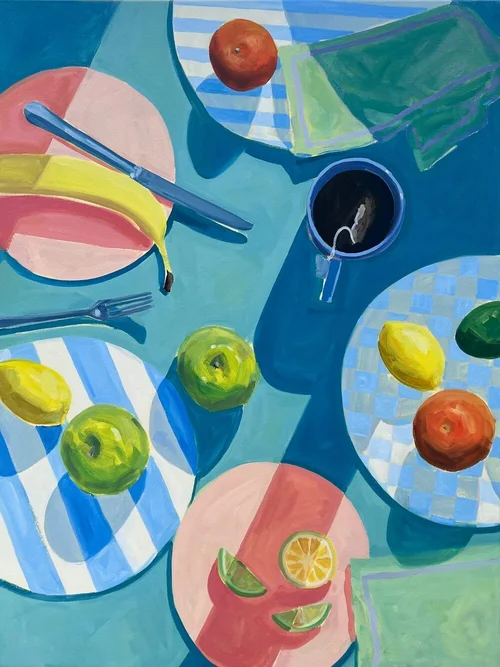
June Picnic, 2024
Claire Cushman
Artemis Gallery
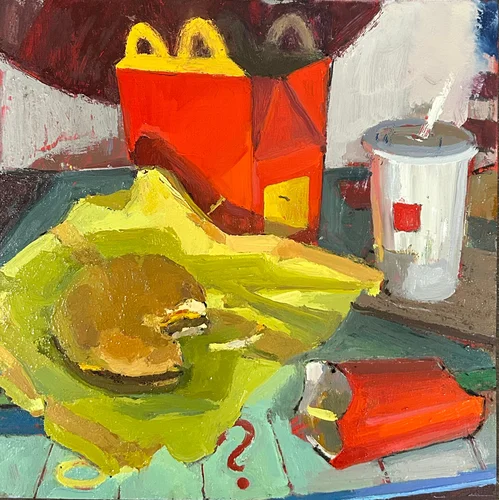
McAmerica, 2025
Nicole Santiago
First Street Gallery
How often you engage with art matters, but variety may be important too.
Fancourt’s study found an association between younger biological age and participating in a diverse range of cultural and creative activities.
Much as we are encouraged to eat a variety of fruits and vegetables, we may gain more from the arts when we vary what we consume and create.
“Each type of arts activity has different effects on us cognitively, emotionally, and physiologically,” Fancourt said. “You should mix up your watching, making, listening, and creating.”
Try combining active and receptive experiences. You could visit a gallery one week, attend a concert the next, then spend an afternoon painting, photographing, or making something by hand.
4. Turn online discovery into real-world engagement
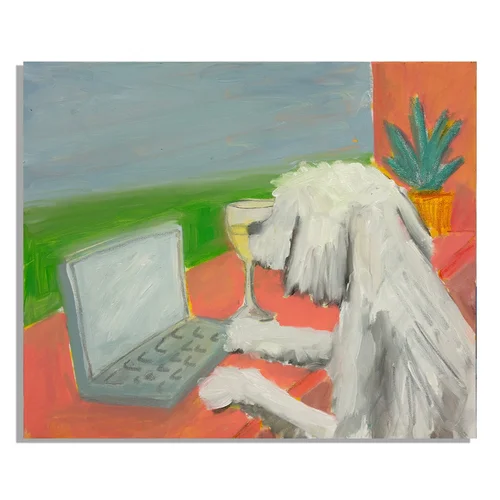
White dog side view working at window with office plant, 2026
Scott Reeder
Saenger Galería
Digital platforms have made it easier than ever to discover artists, explore exhibitions, and encounter art from around the world. But Fancourt suggests that, where possible, online engagement should be a starting point rather than the whole experience.
“Viewing art on our phones or laptops or participating virtually in activities can dilute some of the health benefits of the arts,” she said.
Use digital tools to find artists, galleries, fairs, and exhibitions that interest you, then look for opportunities to experience art in person—whether by visiting a local show, attending a live event, or spending time with a work you own. “Make your daily arts engagement real, not virtual, for maximum effects,” Fancourt said.
5. Give art your full attention
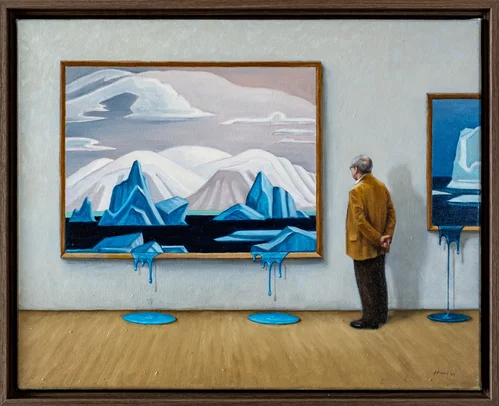
At the Museum I, 2020
Toni Hamel
Oeno Gallery
Mindfulness—the practice of maintaining awareness of our thoughts, feelings, bodily sensations, and surroundings—can be difficult amid the demands of everyday life. But Fancourt says being fully present is an important part of getting the most from an artistic activity.
“Take time to savor the experience,” she said. “Whatever creative activity you’re doing, spend some of the time trying to think of nothing other than the art and being entirely present. Resist the urge to multitask.”
Put your phone away while visiting an exhibition. Listen to a piece of music without checking your email. When painting, crafting, or reading, focus on the colors, textures, sounds, and emotions of the experience rather than trying to complete another task at the same time.
The aim is not simply to fit more art into your day, but to pay attention to it when you do.
…It’s never too late to begin
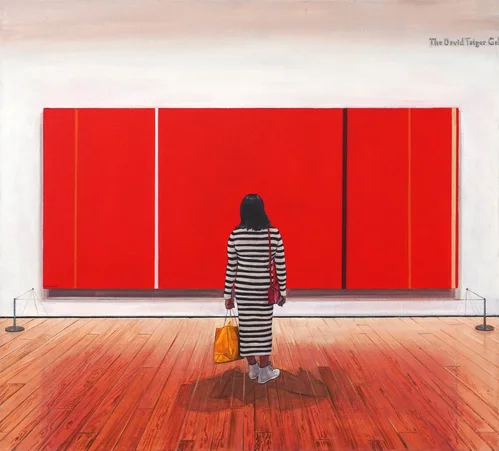
Barnett Newman: Vir Heroicus Sublimis/MoMA (Man, Heroic and Sublime), 2023
Joe Fig
Cristin Tierney
According to the UCL study, the “associations between leisure and epigenetic ageing became more prominent in adults from mid-life.”
This means that “the relationship between arts engagement and biological aging becomes larger and more important as we get older,” Fancourt says.
So it’s never too late to improve your health through the arts. By making art engagement regular, manageable, varied, physical, and mindful, you may be adding more than enjoyment to your life—you may also be supporting healthier aging.
