


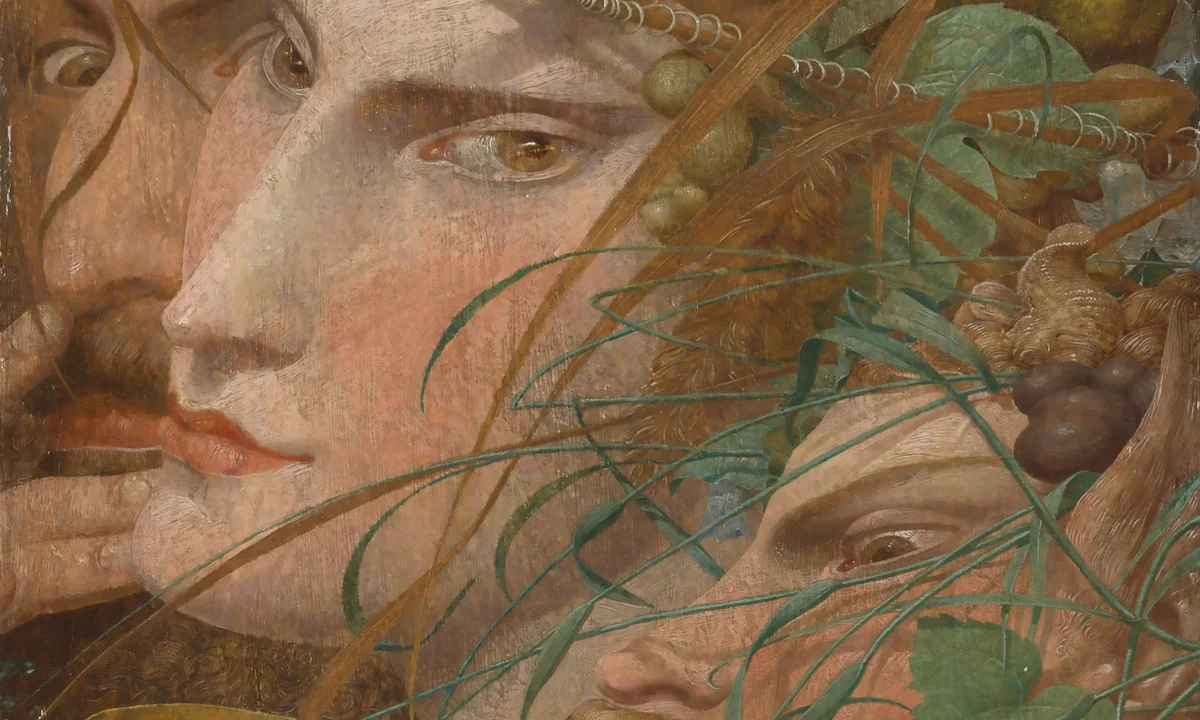
The complex relationship between artistic genius and mental illness is a widely acknowledged phenomenon and it was never more apparent than in the tragedy of the Victorian painter Richard Dadd (1817-86). His collapse into insanity occurred after an arduous journey to the Middle East in 1843 while working as a draughtsman.
Previously known for his intelligence, sensitivity and mild manners, Dadd returned to his family suffering from a dangerous and frightening affliction. Worse was to follow in the same year when, answering the call of his hallucinations, he murdered his father. Dadd was found insane and committed to Bethlem Hospital in south London in 1844. In 1864 he was moved to Broadmoor Asylum in Berkshire until his death in 1886.
A new and rather more liberal governance at Bethlem allowed Dadd to continue “his fine fancies on the canvas despite the most revolting conversations and the most brutal behaviour”. But those were not the only obstacles to Dadd’s creativity. The incarceration at Bethlem deprived him of the conventional inspiration of dramatic perspectives, flowers, butterflies and even the faces of his family. Instead, Dadd’s paintings were mainly derived from memory and a painfully altered state of mind, but a mind that ran untethered in the landscape of his fervid imagination.
A photograph of Dadd in around 1857, when he was incarcerated at the Bethlem Hospital Courtesy of Bethlem Museum of the Mind/Alex Fox, Roy Fox Fine Art Photography
Dadd began his training at the Royal Academy Schools in 1837 and by the early 1840s he won acclaim for highly imaginative scenes of fairy life. However, it is those he made after the onset of insanity that are the primary focus of Richard Dadd: Beyond Bedlam at the Royal Academy of Arts. Comprising 100 works, it is the most comprehensive show of Dadd’s work since a 1974 exhibition at the Tate Gallery—a pivotal moment for the rapidly growing interest in Dadd’s work. Until then it had been the almost unique preserve of small band of connoisseurs and intellectuals, including the art historian Sacheverell Sitwell and the war poet Siegfried Sassoon.
The catalogue of the 1974 exhibition was written by Patricia Allderidge, the archivist at Bethlem Hospital. It is a work of meticulous scholarship and 52 years later it continues to serve as invaluable document of Dadd’s life and work. It was not until half a century later, in 2011, that the next comprehensive account was published, Richard Dadd: The Artist and the Asylum by Nicholas Tromans.
Now Tromans is the guest curator of the Royal Academy exhibition that includes many of the masterpieces on which Dadd’s posthumous fame has grown. At the top of an impressive list is the famous The Fairy Feller’s Master-Stroke (1855-64) followed by Puck (1841), Titania Sleeping (1841), Contradiction: Oberon and Titania (1854-58) and, perhaps most mysterious of all, Bacchanalian Scene (1862).
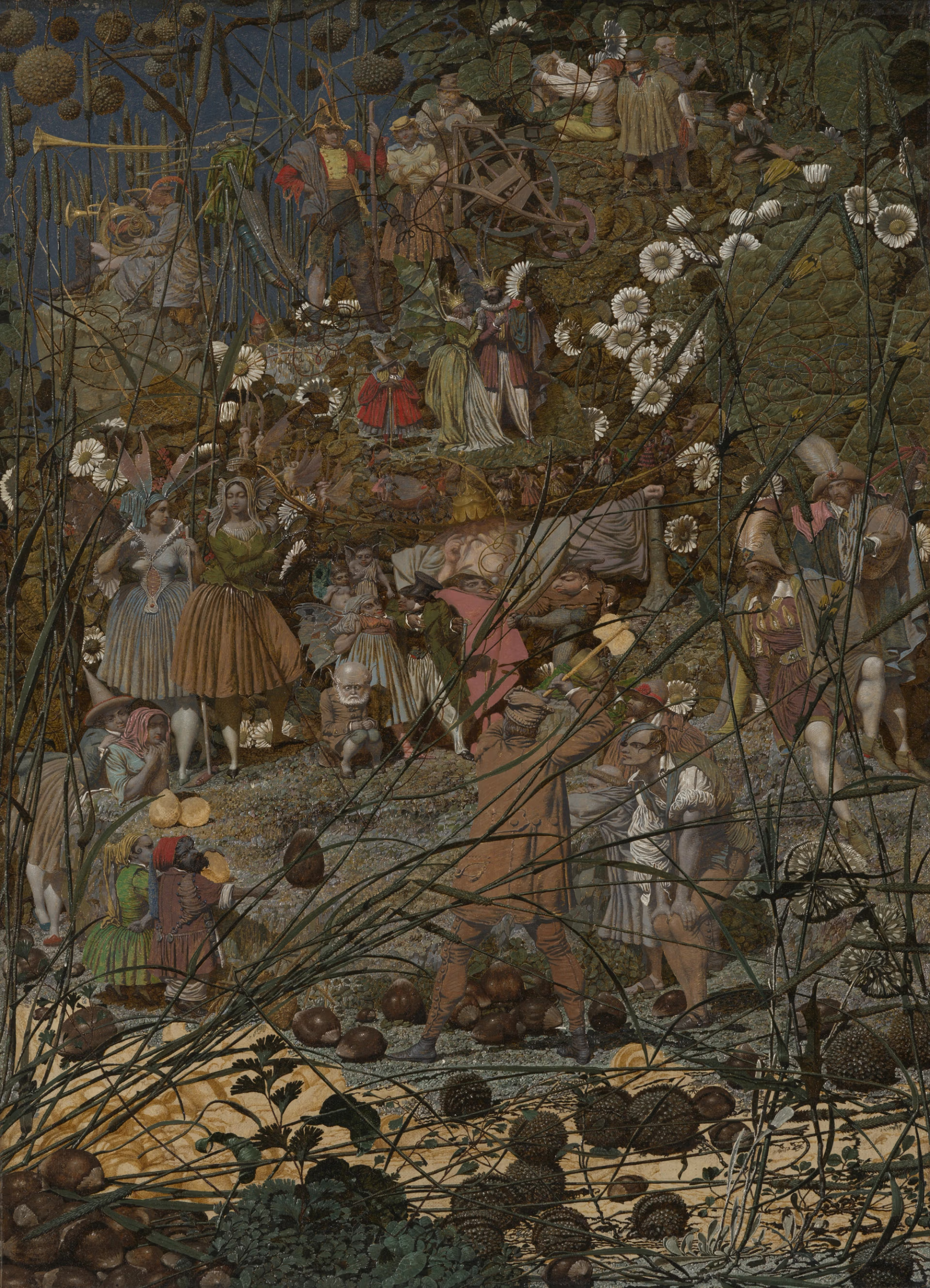
Dadd’s most famous work, The Fairy Feller’s Master-Stroke (1855-64) Photo: © Tate
These are highly finished oil paintings. But Richard Dadd’s extraordinary facility included watercolour drawings that are a breathtaking combination of technical bravura and the needle-sharp observation of the miniaturist. In these, the complexity of Dadd’s mind continues to be obvious.
The Child’s Problem (1857), as the title implies, has proved an enduring problem to scholars but an essay in the exhibition catalogue by Sarah Thomas presents a very persuasive interpretation of Dadd’s inspiration: it includes chess sans voir, the game played without a board, as well as references to abolitionism and classical sculpture. This is one of four scholarly contributions from art historians, but the psychiatrist Robert Howard breaks new ground in giving his diagnosis of Dadd as schizophrenic. His contribution returns us to the wider, and perpetually enigmatic, relationship between mental illness and artistic genius.
The catalogue is copiously illustrated and some remarkable details—such the butterfly confronting a fairy hiding beneath a leaf in Contradiction: Oberon and Titania—help us to understand the awe-inspiring vision and technique of Dadd’s work. Conservation lighting in the show will mean that to fully appreciate Dadd’s genius, a magnifying glass will be useful. Then visitors will be fully amazed, perhaps a little changed, by Dadd’s restless and haunting imagination.
• Richard Dadd: Beyond Bedlam, Royal Academy of Arts, London, 25 July-25 October
