


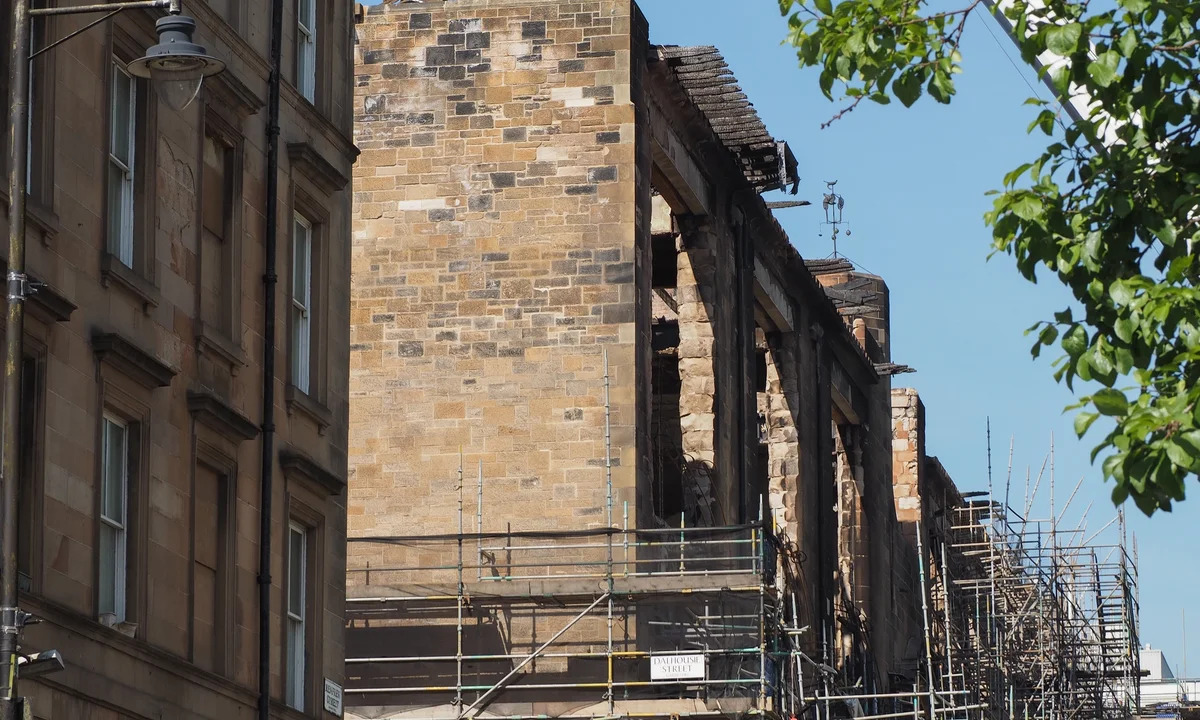
Restoring the iconic Glasgow School of Art (GSA), which was destroyed in a fire in 2018, will cost around £265m, an “amount which is unaffordable”, says the school’s board of governors in a new report.
The figure was revealed in the school’s new Business Case addendum, described as “a detailed and up-to-date analysis of options for the future of the Mackintosh Building following the settlement of a long-running insurance claim”.
Located in the Garnethill neighbourhood, the 1909 building was designed by the Glaswegian architect and designer Charles Rennie Mackintosh, and his wife, the artist Margaret Macdonald Mackintosh. Colloquially known as “The Mack”, the landmark Art Nouveau building was extensively damaged when a blaze tore through the historic venue in June 2018. The building was nearing the end of a £35m restoration following a previous fire in May 2014 when the east wing was left relatively intact but major parts of the library and west wing were destroyed.
Around £26m has been spent maintaining the existing structure, the school said, but a complete restoration will cost around £265m. GSA says that “financial clarity”, provided by an insurance settlement regarding the 2018 blaze, has shown it “cannot take forward the faithful reinstatement on its own”.
The funding gap is mainly due to the rising costs of construction projects, according to the school. The rebuilding of the school was also delayed by a dispute with the insurers which was settled last month. Meanwhile scaffolding in place since the 2018 fire is due to be removed.
Ann Priest, the chair of the GSA board of governors, says in a statement: “We very much want to see this exceptional and globally important building rebuilt, but we cannot put the financial sustainability of the GSA at risk in doing so.”
She told the BBC: “We are still hoping to go towards a full, faithful reinstatement. It’s not going to be an exact replica, due to changes in construction and building [standards]”, adding that that the school would now look for “visionary individuals” who could bring “serious investment” to the project as well as governments and local authorities.
The GSA proposes that the building could be the centrepiece of a new creative quarter, becoming “an anchor project in a creative and cultural production innovation district”.
