


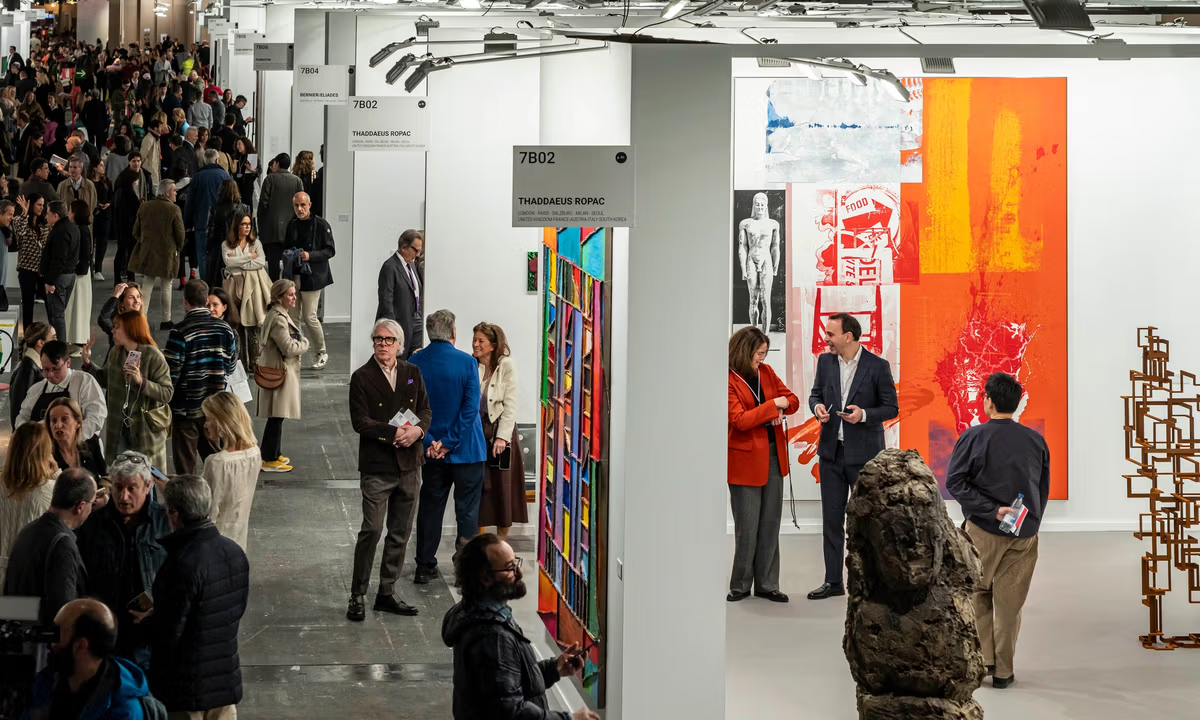
Arco Madrid, Spain’s largest commercial art fair, marks its 45th edition this month (4-8 March). The fair serves as a meeting point for Spain’s art community amid market and population shifts. This year, Arco will welcome 206 galleries from 36 countries in the sprawling Ifema convention centre in Madrid’s north-eastern Barajas district.
The fair comes as Spanish galleries nationwide protest the country’s high value-added tax (VAT) on art purchases. At 21%, it is the highest on the continent, and around four times as high as neighbouring Portugal (6%), France (5.5%) and Italy (5%). Galleries have demanded action from the government, saying it hinders Spain’s ability to compete internationally.
Arco Madrid’s director, Maribel López—a former dealer herself—tells The Art Newspaper that she and her team support Spanish galleries and aim to amplify their voices and concerns. During last year’s fair, galleries turned the lights off at their stands for an hour in protest at the VAT rates.
“It’s not only that they are, in terms of competitiveness, in a worse position than their European colleagues; it is the situation that other areas of contemporary culture have reduced taxes. What’s happening is that contemporary art is understood only as an elite product, when it’s much more than that,” López says.
More than a third of the exhibiting galleries at Arco Madrid are from Spain, with a similar number from Latin American countries Courtesy Arco Madrid
“In the short term, I’m concerned about how this will affect business for Spanish galleries, medium term, how that will affect visibility of Spanish artists abroad,” López adds. “And third, what society are we if we can’t understand the relevance of contemporary art as a trigger for bigger, more important questions?”
Spain is heavily represented in Arco Madrid’s lineup, with 34% of participating galleries hailing domestically. Heavyweight Spanish exhibitors include Elvira González, Elba Benítez, Leandro Navarro, Travesía Cuatro and ProjecteSD. More than one-third of the international exhibitors are from countries all over Latin America, like Casas Riegner from Bogotá and Galería Luisa Strina from São Paulo. European galleries like Esther Schipper, Thaddaeus Ropac and Carlos/Ishikawa will also join.
The fair is known for being a destination in Europe to discover new art from Latin America, and artists from the region have been curatorially highlighted since 2012, according to López.
It is serendipitous with the influx of wealthy Latin American expats coming to Madrid, spurred by the continent’s “pink wave”, the turn towards left-wing governments in the 21st century. Spooked by the spectre of more economic regulations, high-net-worth families from countries like Mexico, Venezuela, Argentina, Colombia and Brazil have flocked to Madrid, earning the city the nickname “the new Miami” and further fuelling the fair’s already strong market for Latin American work.
Once again, Arco Madrid will present a special section dedicated solely to art from Latin America, this time curated by José Esparza Chong Cuy.
