


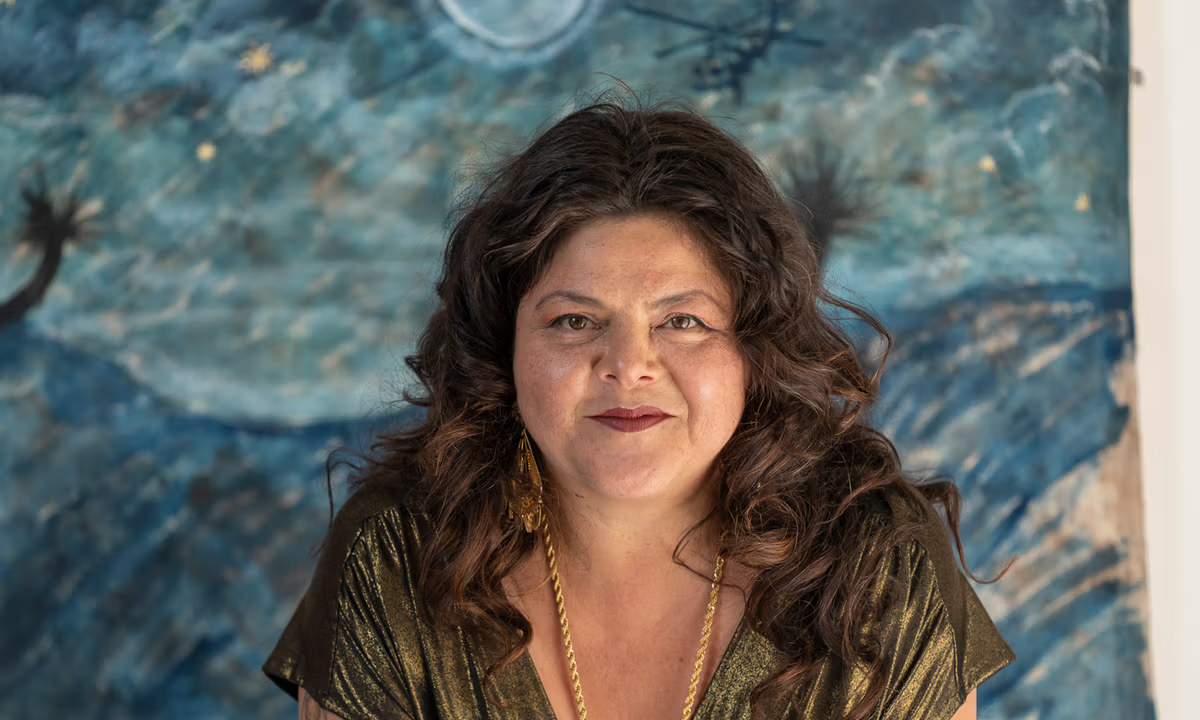
In Sandy Rodriguez’s maps, US riot police share space with mythic sea creatures and figures from Mesoamerican rebellions. Surveillance helicopters in the form of Muertos-style calavera skulls fly ominously overhead. Painted onto amate paper made from tree bark, her maps seem to erupt into rough, swirling terrain.
Rodriguez has been making her own version of Mesoamerican and colonial-era European codices for nine years, populating land masses with histories of colonisation, contemporary acts of state violence, plant and animal life, and uprisings across centuries. In her new exhibition at the Hispanic Society Museum and Library in Washington Heights, Tierra Insurgente, Rodriguez’s maps are installed alongside historic codices and globes from the institution’s collection, including Map of Tequaltiche, made in 1584 by Caxcan artists and portraying the people’s rebellion against Spanish rule in 1541.
The museum’s own codices are displayed alongside the artist’s Photo by Alfonso Lozano
The Art Newspaper: Resistance Map of Gulf of Mexico (2025) includes alligators and a flying fish carrying a warrior’s soul, plus references to historic events and the militarised response to peaceful racial-justice demonstrations in New Orleans in 2020. What connections are you drawing between these symbols and events?
Sandy Rodriguez: I’m trying to understand stories of resistance across that region and the response to transatlantic slavetraders. Looking back at historic moments across a region shows that these lands have been defended fiercely for generations. It shows resilience, persistence and hope.
We are just a long line of people who are going to take a stand and be on the right side of history. I integrated elements from actual 16th-century materials from the collection into that map. There is a “charging” or dialogue between these materials that remains even after the objects are removed.
How are your material choices bringing new dimensions to these maps?
When I was in residency at Art + Practice, the foundation in Los Angeles co-founded by Mark Bradford, I was painting moments of resistance, specifically around the time of [the 2014 killing of the teenager Michael Brown in] Ferguson. I was making tear-gas paintings in oil on canvas using cadmium reds and carcinogenic pigments to invoke that chemical poison scene.
But I had also taken a trip to Oaxaca and procured cochineal, a bright-red pigment that changed global art markets. I realised the content, material and form could support each other, so the object has a physical power specific to the region. As a third-generation Mexican painter, I wanted to use a vocabulary of colour specific to the history of image-making in the Americas.
I don’t make the bark paper myself. It’s a lengthy process. I do grind, levigate and wash all my own minerals. Amate is the primary support for recording histories and genealogies. Upon the Spanish invasion in 1519, these collections were burned to erase past culture and establish a colonial regime. Only a handful of codices still exist, and they are in places like Berlin or Florence—not accessible to Mexican artists in Southern California.
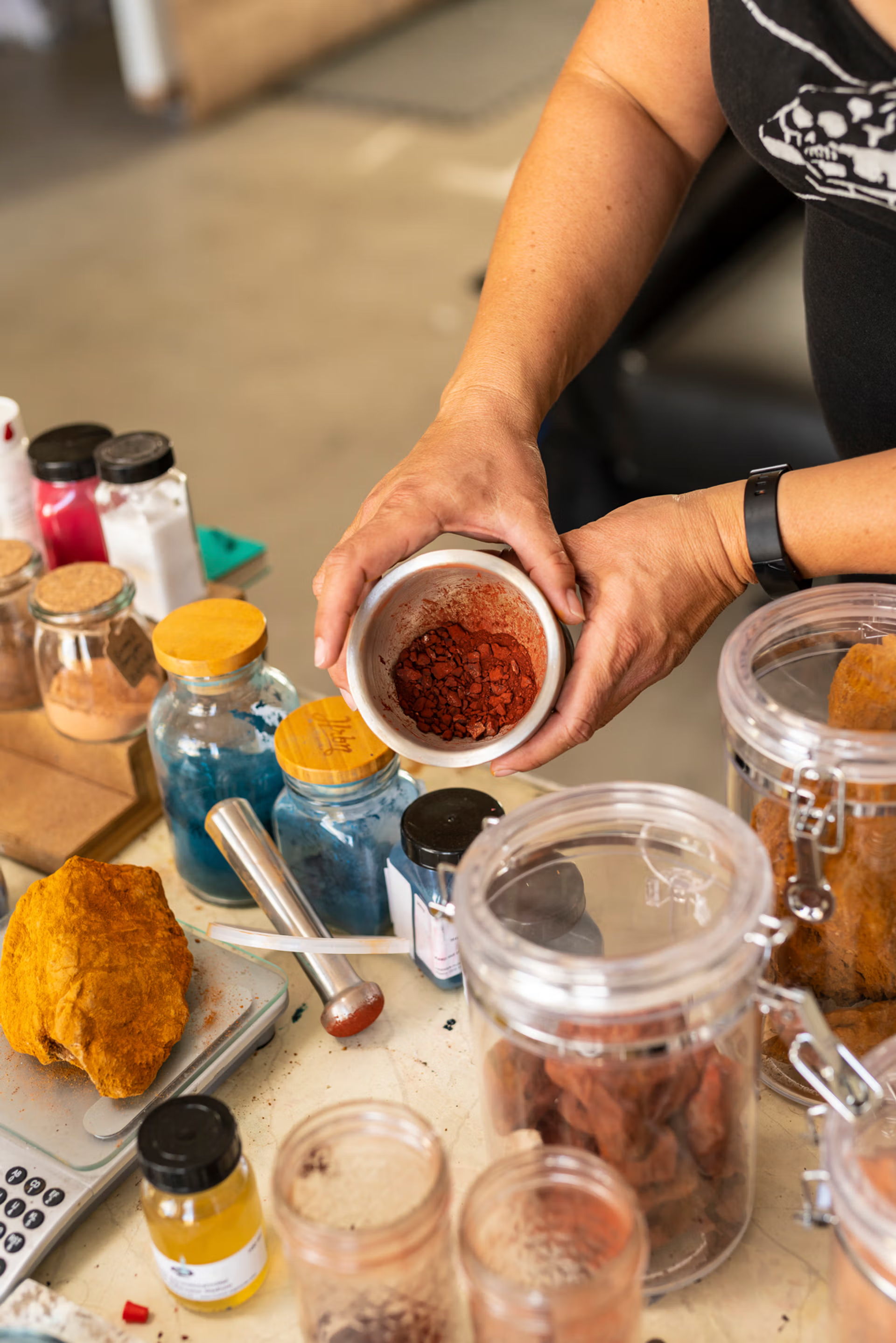
Rodriguez uses natural pigments on amate paper made from bark Photo by Elon Schoenholz
Amate is a sacred, ceremonial and once-outlawed paper. It was used to create decorations for deities or to influence harvests. It’s made from the exterior bark of a wild fig or mulberry but, due to ecological changes, the Otomi papermakers I work with now use jonote and agave. The fibres are boiled in an alkaline bath of water and lye—made from wood ash and lime water—to break them down. They pull the fibres out like hair, lay them on a board and beat them with an amate beater—a stone tool like a meat tenderiser—to knit the fibres together.
Because it’s different plant fibres, the paper has dynamic patterns of movement and absorbs watercolour differently. I don’t gesso the paper; if it gets too wet, it will open up again. I had to spend ten years learning to work on this support; I consulted with paper conservators from major museums to understand its properties. When I’m looking at a sheet of amate, I will turn it until I find a horizon line or a detail that looks like a figure or a squiggle on a map.
What led you to such a deep interest in mapping?
It began with field-study trips to various regions in California, specifically focusing on the deserts. I started doing multi-night campouts in remote deserts to understand ethnobotany—the endemic plants that grow there and nowhere else in the world. California has almost 4,000 native plants, making it incredibly biodiverse. I would come back with sketchbooks of field notes containing plant names and how they have been worked with by communities since time immemorial.
I also had lists of publications explaining the ratios for making medicine and dyes, as well as other utilitarian uses. Prior to 2017, my paintings were landscapes, so this was an opportunity to pull back and place those plants within their geographic specificity and floristic provinces. It became a way of mapping bioregions through their flora.
When you look at a map, you understand it is a visual narrative and a way in which systems of power and domination have existed. In the Americas, there is an opportunity to think about Indigenous cartography as well as European cartography and synthesise those systems to communicate a distinct cosmo-vision and connection to place. Land holds memory. I still have a tiny jar of plant specimens from one of the first trips, and taking a sniff of creosote transports me right back.
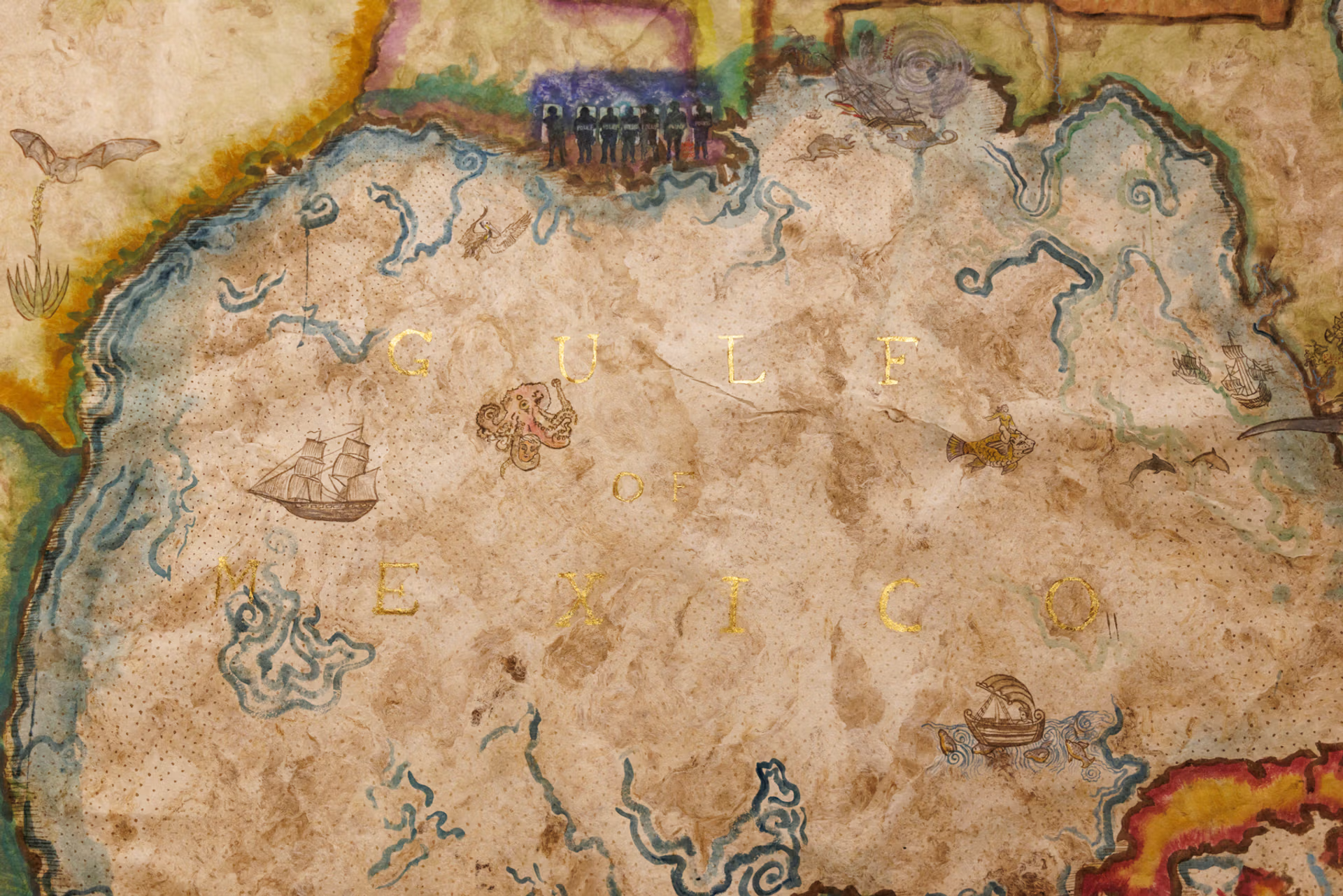
This work includes a howling beast—an omen from the Florentine codex—and figures from a rock-art site that Rodriguez visited, which included scenes of dancers, a friar and hunting from lower Pecos along the Rio Grande in Texas Photo: Alfonso Lozano
Did you grow up around Indigenous systems of knowledge?
I was trained in a conceptual feminist programme at the California Institute of the Arts, but my Mexican artist grandparents were trained in the European tradition, so I grew up around [the 17th-century Sevillian painter Bartolomé Esteban] Murillo’s studies. I’ve had to undergo an unlearning of the Western European tradition. I worked in museums for 17 years, including 14 at the J. Paul Getty Museum, teaching methods of Medieval-to-19th-century art. For the past ten years, I’ve done a deep dive into how traditional colours of the Americas have been used conceptually and spiritually.
These are objects dense with history and research.
Every detail has been thoroughly researched. On amate, you can’t blend or erase, so I do 30 or 40 small studies before a map happens. I photograph the studies and use Procreate on my iPad to scale and move elements around. There are also moments of levity, like sea monsters from various atlases, because the work can get pretty heavy.
• Sandy Rodriguez: Tierra Insurgente, Hispanic Society Museum and Library, Manhattan, until 28 June
