


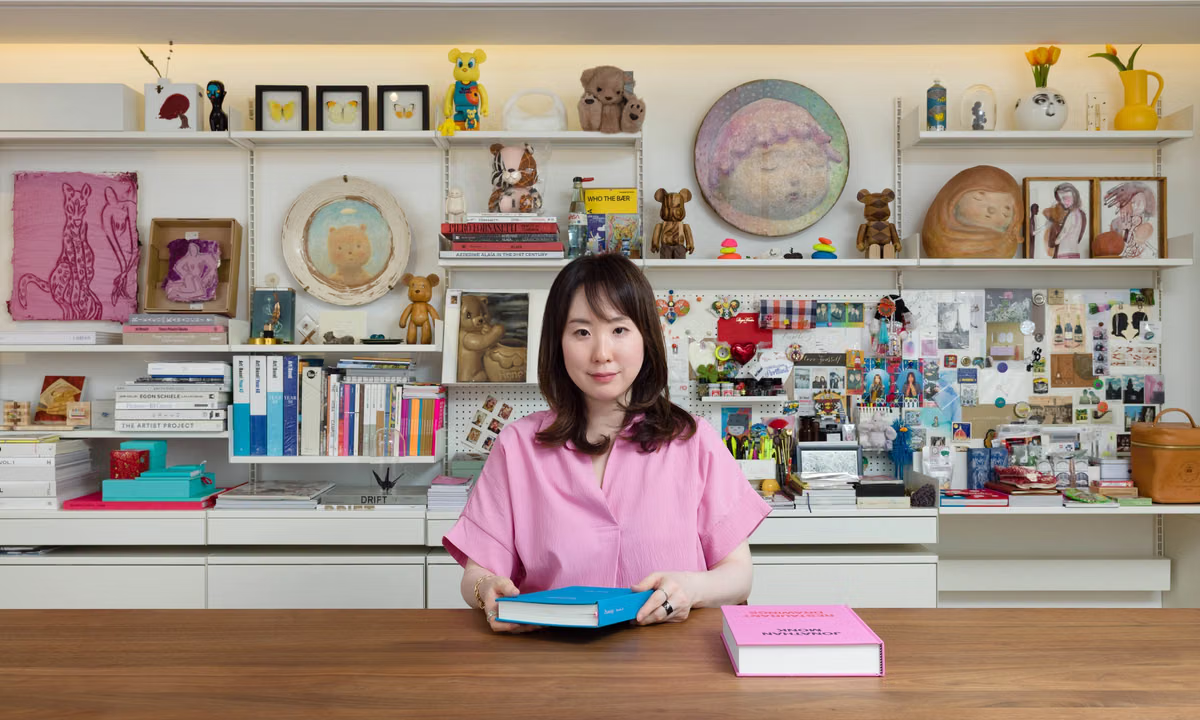
Mari Hong is arguably one of the most hardworking collectors from Asia. Each year, the Seoul-based art lover with a background in fashion design and marketing travels to five to seven major international art fairs and biennials that are at “the forefront of the global art scene”—a habit she developed from a young age accompanying her parents to art fairs.
Mari Hong’s home is filled with favourite pieces, such as a Brent Wadden work (on wall) Siwoo Lee, OnArt Studio
After a decade of effort, Hong has built an expansive contemporary art collection, including the likes of Alex Katz, Philippe Parreno and Yuko Mohri. She has also established a “living archive of contemporary art” in her domestic space that also includes crucial historical ephemera: exhibition catalogues, VIP passes, limited-edition objects and personal notes from visits to artists’ studios.
“My guiding philosophy is ‘living with art’,” Hong says. “I want to keep [my collection] close, thoroughly curate my domestic environment, and interact with the artists’ positive energy every day.”
The Art Newspaper: What was the first work you bought?
Mari Hong:My initial acquisitions were charming pieces featuring a teddy-bear motif, evoking a profound sense of childhood nostalgia. They were acquired not as grand statements, but as intellectual anchors to be placed on my study bookshelves and lived with daily like a Cabinet of Curiosities. This quiet spark eventually ignited my lifelong dedication to archiving contemporary art, naturally evolving into acquiring and commissioning major works by world-renowned artists like Otani Workshop and Issy Wood.
What was the last work you bought?
This year has been exceptionally dynamic on a global scale. Most recently, this August, I acquired a striking piece by Mia Chaplin via Whatiftheworld gallery, having personally visited her studio in Cape Town earlier in the year.
How long do you take to decide to buy?
Rather than purchasing impulsively, my decisions are based on observation, trust and relationships with the artists and galleries. I follow artists across biennales, visiting their studios globally, and letting the work digest.
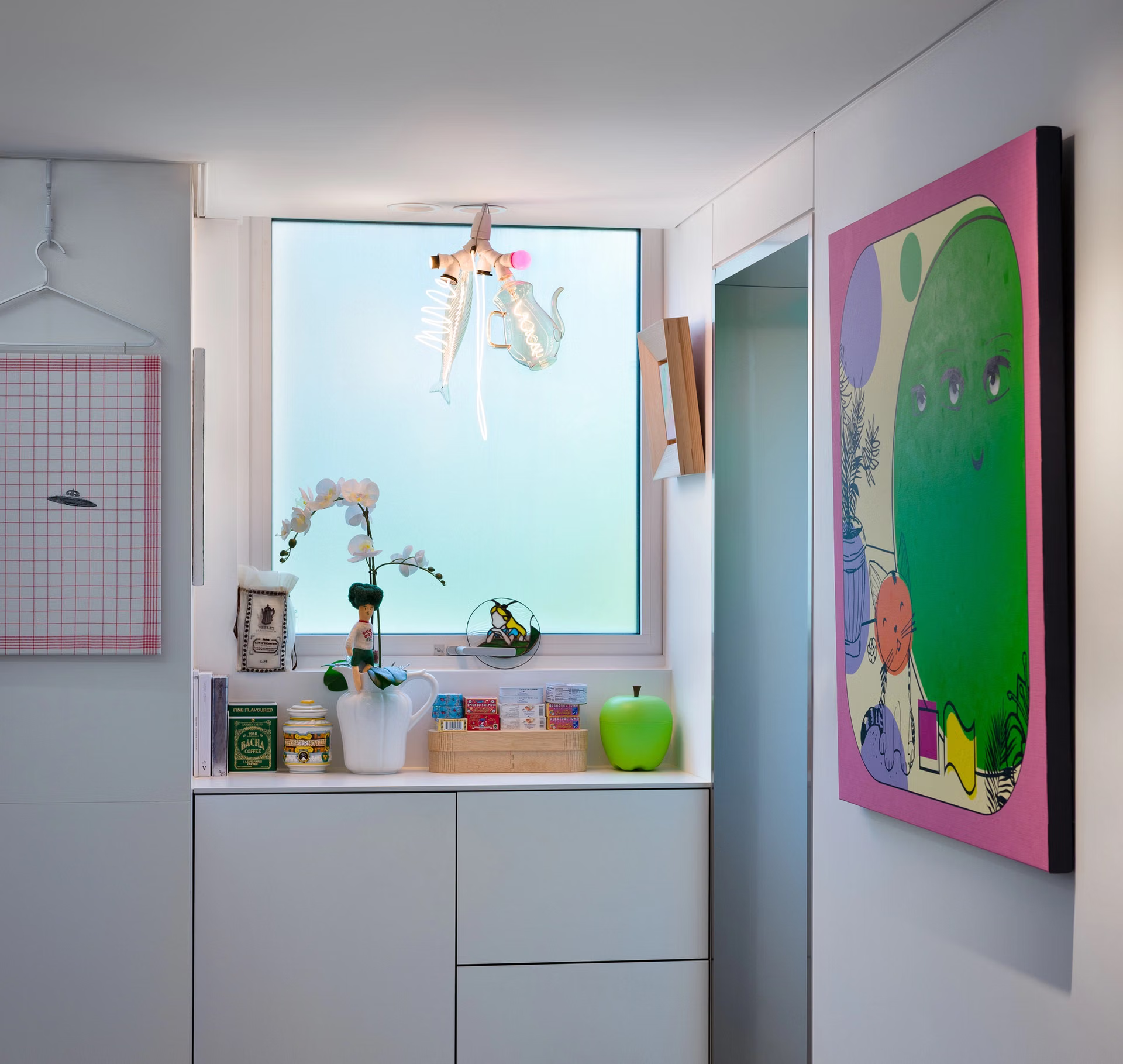
Hong has work from her collection throughout her home: “I want to keep them close,” she says Siwoo Lee, OnArt Studio
What do you regret not buying when you had the chance?
There is a major canvas piece I encountered during an early studio visit. I hesitated, waiting for the “perfect moment”. However, rather than harbouring regret over missed opportunities, I choose to believe those pieces were simply not meant to be part of my collection.
If you could have any work from any museum in the world, what would it be?
If space and location were entirely inconsequential, I would select a monumental outdoor contemporary sculpture or installation that commands the surrounding landscape.
What’s your least favourite thing about art fairs?
The overwhelming sense of urgency and FOMO is definitely a downside, as it can sometimes overshadow the quiet, slow appreciation that art truly deserves. Additionally, the inevitable physical toll of navigating vast exhibition halls for consecutive days is challenging.
What tip would you give to someone visiting Seoul for the first time?
I highly advise exploring the Hannam-dong and Samcheong-dong districts, which are homes to premier galleries and sophisticated dining. Samcheong-dong offers a masterclass in the harmonisation of the traditional and the contemporary. Strolling along the ancient stone walls of the palaces and the Secret Garden (Biwon) on a crisp day is an unparalleled aesthetic pleasure.
Can you recommend any hidden gems in Seoul that might change visitors’ perceptions of the city?
I strongly recommend Sinheung Market in Haebangchon. It resembles a forgotten, dilapidated neighborhood market from the 1970s but it is now a labyrinth of indie cafes, boutique craft ateliers and intimate natural wine bars concealed within raw, retro structures. It unveils a grittier, distinctly bohemian and highly artistic facet of Seoul.
Where do you go in Seoul to get away from it all?
Early in the morning, before the city’s kinetic energy peaks, I take a meditative walk on Namsan Mountain with my dog, Byeoli. When a deeper retreat is required, I spend weekends at Herb Village near the DMZ, completely severing ties with the urban hustle to commune peacefully with nature.
